Oh man, buckle up, chooms, because the future of Night City is looking brighter than a Megabuilding H10 billboard in 2026! Just when we thought CD Projekt Red had given us everything with the mind-blowing 2.0 update and the Phantom Liberty DLC—seriously, it was like they performed a full-system reboot on the game's soul—they go and whisper the sweetest words to our cybernetically-enhanced ears: Project Orion is coming. This isn't just a sequel; this is the next evolution, and my circuits are buzzing with the potential. We've seen what happens when a game decides to stop just being a game and starts feeling like you're living inside the coolest, most stylish film you've ever seen. And let me tell you, there's one ghost from the past that's showing us all how it's done.
The Blueprint is Already Written in Neon and Steel
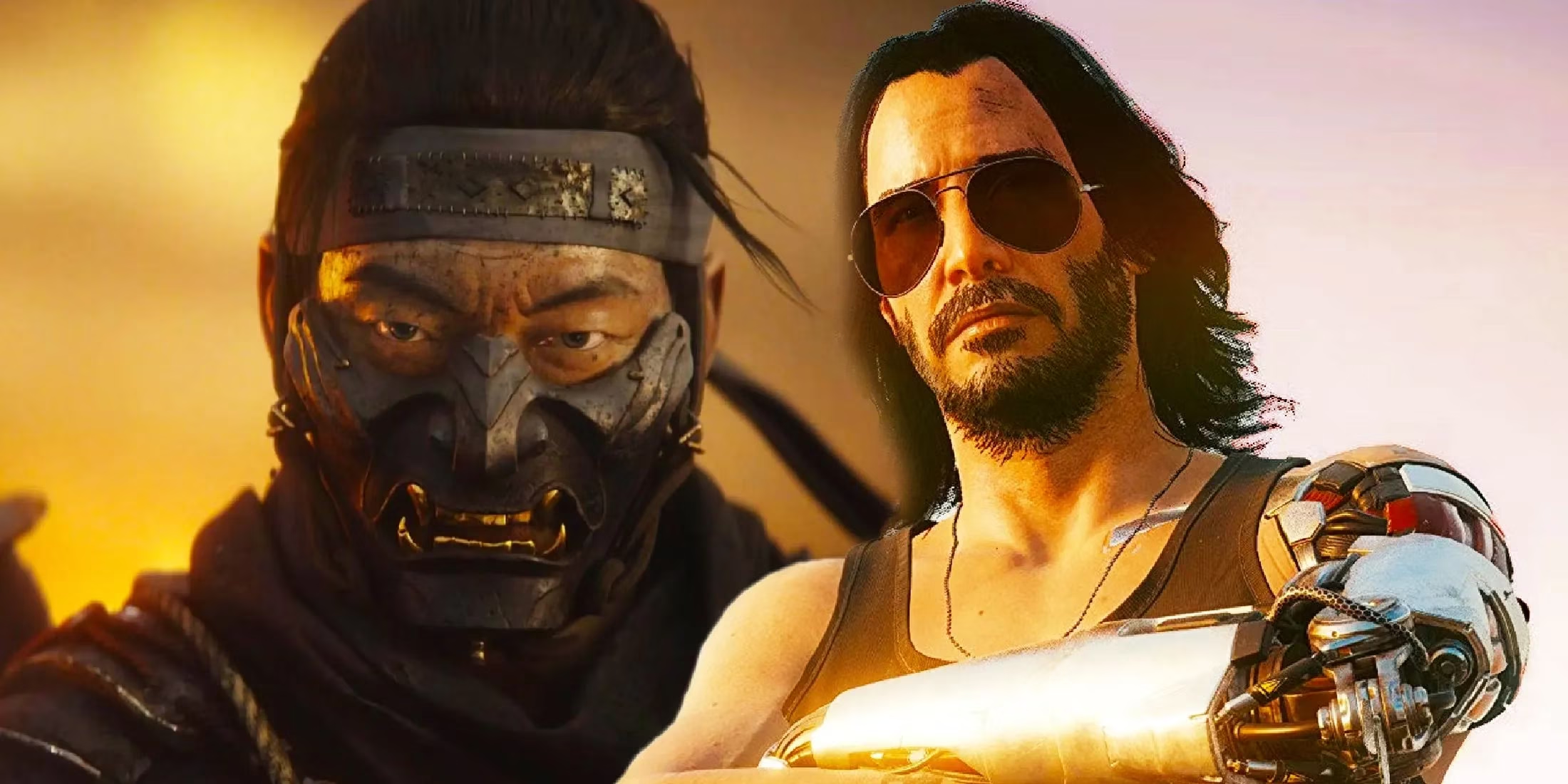
Listen, CDPR isn't just talking out of its corporate-grade exhaust port when they say Project Orion will blend game and film into one cohesive experience. They've already got skin in the game! I mean, Cyberpunk: Edgerunners on Netflix didn't just add to the lore; it was the lore, bleeding from our screens straight into our brains. It proved this world can live and breathe anywhere. But translating that into a playable experience that feels as seamless as watching a blockbuster? That's the real heist. And for that, we gotta look east, to the island of Tsushima. Sucker Punch didn't just make a game; they bottled the essence of classic samurai cinema and let us drink it. Project Orion needs to do the same for cyberpunk cinema. It's a no-brainer!
Less UI, More You in the World
Let's get real for a sec. One of the most immersion-breaking things in any open-world game? Staring at a glorified GPS mini-map in the corner instead of the breathtaking, rain-slicked dystopia you're supposed to be surviving in. Ghost of Tsushima was like, "Nah, we got something better." The Guiding Wind. Man, what a concept! The world itself—the rustling grass, the drifting leaves—tells you where to go. It's poetic, it's subtle, and it makes you feel connected to the environment in a way a blinking icon never could.
What Project Orion Could Steal (I mean, borrow):
-
Ditch the Standard Mini-map: Imagine if Night City guided you through its own language. Flickering neon signs that subtly point the way, AR graffiti that only your Kiroshis can decode, or even a dynamic, diegetic navigation system from your car or agent. The city itself should be your interface.
-
Minimalist UI as Standard: Give us the option to strip the HUD down to its bare essentials. Let the world's visual cues—the glow of a dataterm, the distinct architecture of a gang hideout—be our primary guides. Make us learn the city, not just follow a dotted line.
Filter the Future: A Cinematic Paintbrush
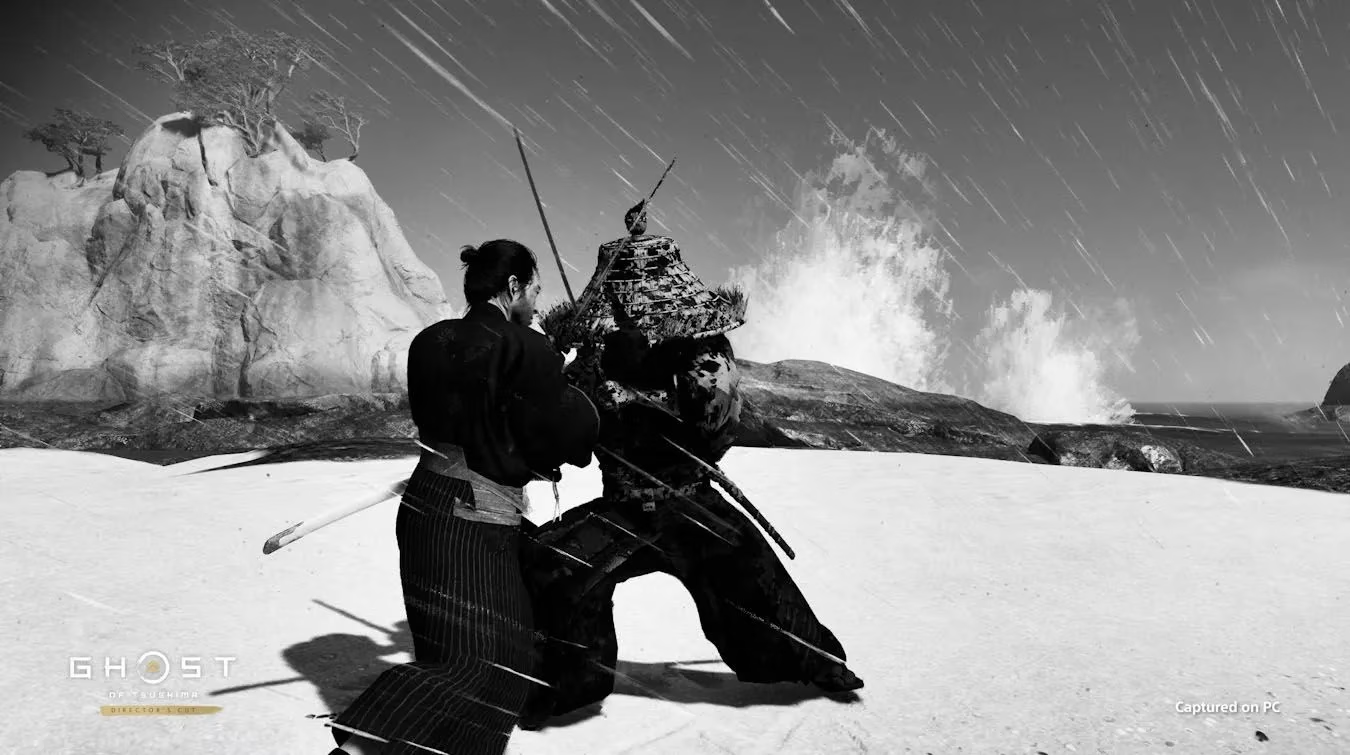
Ghost of Tsushima's Kurosawa Mode wasn't just a gimmick; it was a love letter. Slapping that black-and-white filter on with the film grain and audio tweaks didn't just change how the game looked; it changed how it felt. It transformed the experience into a living, breathing homage. Project Orion sits atop a mountain of cinematic inspiration—Blade Runner, Akira, The Matrix—just begging to be tapped into.
Visual Filter Ideas for Project Orion:
| Filter Name | Inspiration | Visual Effect |
|---|---|---|
| Runner's Gaze | Blade Runner (1982) | Heavy sepia tones, enhanced volumetric rain and fog, persistent neon bloom, VHS-style scan lines. |
| Data Storm | Akira & Tech-Noir | High-contrast, electric blues and hot pinks, trailing light effects on fast movement, glitch artifacts. |
| Corpo Documentary | Corporate Propaganda | Clean, sterile color palette, a persistent "REC" icon, simulated camera focus pulls during dialogue. |
| Afterhours Grind | Classic Cyberpunk Comics | Bold, ink-like black shadows, saturated primary colors for neon, a visible halftone dot pattern. |
This is the kind of feature that screams "labor of love." It's not about changing the gameplay; it's about letting players curate their own cinematic vibe. One night you're a replicant-hunting blade runner, the next you're a punk in a comic book. The possibilities are, quite literally, endless.
Framing the Perfect Shot: Directing the Action
Ghost of Tsushima's cutscenes and even its standoffs had this incredible, deliberate framing. You felt like Kurosawa himself was operating the camera. Every shot had weight and intention. Cyberpunk 2077 had moments of this, especially in its quieter character moments, but Project Orion needs to bake this philosophy into the very DNA of its moment-to-moment action.
-
Dynamic "Combat Cinematography": Imagine entering a slow-motion Sandevistan dash, and the camera automatically shifts to a dramatic, low-angle shot as you slice through enemies. Or during a high-stakes netrun, the view could split into multiple security feed angles.
-
Environmental Storytelling in the Frame: Use the iconic architecture of Night City—the mega-structures, the cramped alleyways—to naturally create cinematic frames during exploration and conversation, making every vista feel like a carefully composed painting.
The Sound of Silence (and Synth)
Here's the thing everyone forgets—sound design is half the movie magic. Ghost of Tsushima knew when to let the wind and the clash of steel do the talking. Cyberpunk's world is a symphony of chaos, but the moments of quiet desperation are its most powerful. Project Orion's audio needs to have that same dynamic range, pulling back the relentless synthwave to let the drip of pipewater in a flooded basement or the distant wail of a patrol siren build unbearable tension.
The Final Transmission
Look, the foundation is already rock-solid. We've got Keanu's Johnny seared into our collective memory, Idris Elba's Solomon Reed bringing a new kind of cool, and a world so dense you can taste the recycled air. Project Orion isn't about reinventing the wheel; it's about forging that wheel into a chrome-plated, neon-lit hovercraft that glides seamlessly from interactive thriller to cinematic masterpiece and back again.
Ghost of Tsushima laid out the path, showing us that respect for filmic language can create an experience that transcends its medium. If CD Projekt Red is brave enough to fully embrace that philosophy—to let us inhabit a cyberpunk film, not just play a game set in one—then Project Orion won't just be a sequel. It'll be a revelation. A landmark. The kind of thing that makes you sit back after a multi-hour session, the glow of the screen reflected in your eyes, and just whisper... "Whoa."
Now, if you'll excuse me, I need to go boot up my holo-projector and dream of neon-filtered sunsets over Pacifica. The future can't come soon enough.