In the neon-drenched haze of 2026, I find myself drawn back to the chromed heart of Night City, not through a screen, but across a tabletop. The echo of Cyberpunk 2077 has transcended its digital origins, materializing into something tangible and communal. I remember the moment the campaign went live, a silent detonation in the tabletop world. A mere ten minutes—the time it takes to brew a cup of synthetic coffee—was all it needed to shatter its modest goal, the funding counter spiraling into the millions like a rogue eddy cred transaction. Over $5.5 million, whispered from over 22,000 dreamers, each averaging $248 for a key to this new-old city. It wasn't just funding; it was a collective, silent scream for more of that world, for a piece we could hold in our hands. The stretch goals fell like dominoes, each unlock—a new character, a fresh mission, a hidden alley—adding another layer of grime and glory to the promise. This wasn't a purchase; it was a pact.
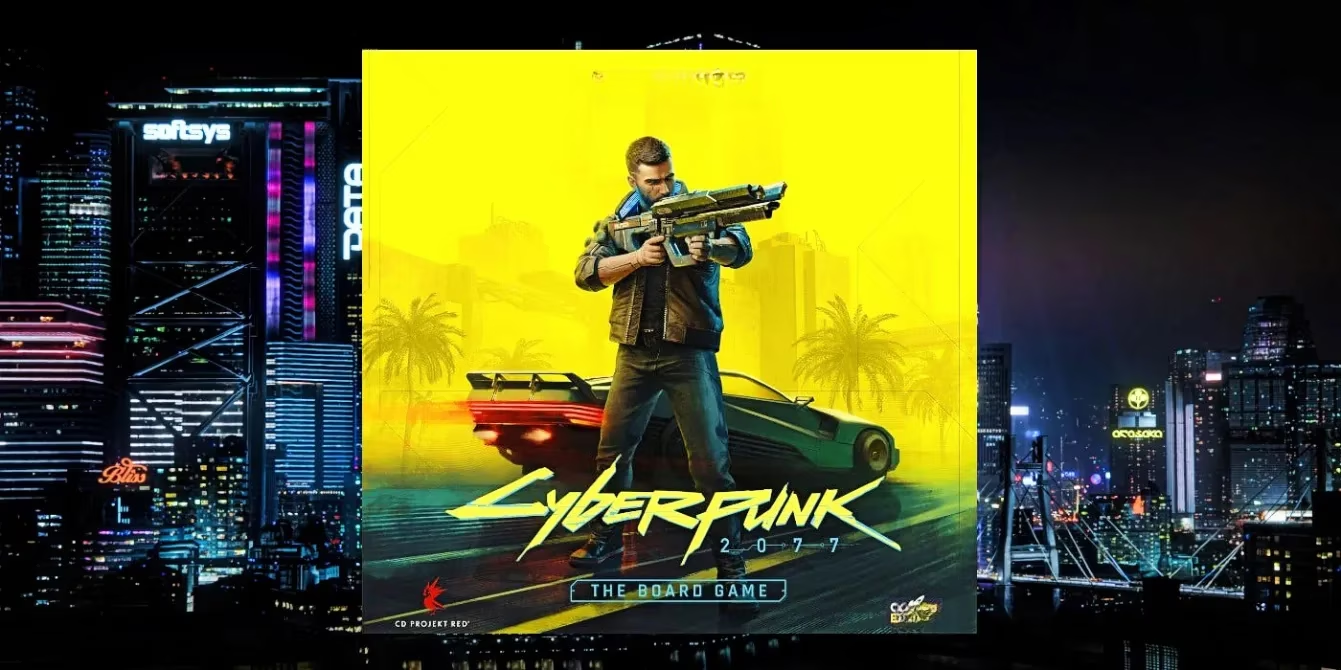
🎲 The Heart of the Game: Our New Night City
This board game is an invitation to a familiar, yet distinctly different, universe. It's built for one to four of us, a crew navigating 13 missions woven around a tantalizing secret: a hidden Arasaka weapon. The path leads us, as V, Jackie, Judy, or Panam, deeper into the corporate conspiracy that veins the city. But that's merely the framework, the standard-issue starting pistol.
-
The Core Loop: Hunt for the weapon, manage your cyberware, outwit corporate enforcers.
-
The Expanded World: Through the unlocked stretch goals, the city breathes wider. We can now call upon allies like the enigmatic Delamain or even a resourceful stray cat. The roster of legends expands, bringing figures like the steadfast Goro Takemura, the brilliant T-Bug, and the transcendent Alt Cunningham into our tactical orbit.
Our adversaries grow more formidable, too. Bosses like Chase Coley and Sandayu Oda stand as monumental challenges, guarding missions that promise to scrape the rust off the deepest, darkest corners Night City has to offer. The game isn't just a retelling; it's our own anthology of stories within the sprawl.
💰 The Choice: Standard, Deluxe, or All-In?
The entry to this world comes in tiers, each a different grade of chrome.
| Edition | Price (at campaign) | What It Offers | Perfect For... |
|---|---|---|---|
| Standard | $79 | The core game + many standard stretch goals (tons of extra content for free). | The savvy runner who wants the full experience without the premium trimmings. A saving of nearly $150 vs. buying separately later. |
| Deluxe | $139 | Everything in Standard + deluxe bonuses: premium map tiles, plastic miniatures, health counters, and those gorgeous bullet-shaped dice. | The collector who feels the texture of the city, who wants the mission components to have weight and the characters to stand tall. |
| All-In | Priceless (a significant pledge) | Deluxe Edition + all four expansions + the exclusive Garry the Prophet add-on. | The ultimate fixer. The one who wants every story, every character, every dark secret laid out on their table. No stone unturned. |
I ponder the decision. The Standard Edition is a tremendous deal, a vault of content secured at ground-floor prices. But my eyes wander to the Deluxe... those miniatures. To see a miniature Johnny Silverhand's Relic on the table, to hold dice shaped like casings from Malorian Arms—that is an immersion that seeps into your fingertips. The All-In bundle is a monument, a complete archive of this tabletop Night City.
⏳ The Clock is Ticking: A Ground-Floor Opportunity
As I write this, the memory of that frenzied campaign is fresh, but the lesson is eternal for projects like this. The window for these foundational pledges was fleeting. Back then, the promise was delivery by December 2025. For those who joined, it was about securing a legacy at a price that would never return. Post-launch, the landscape changes. The bundled value fractures into individual expansions, the cost inevitably climbs. Getting in early wasn't just about patience; it was about vision and belief in the collective dream of bringing the digital rain into our physical dens.
The exact mechanics of play—the crunch of the dice, the flow of the netrunning actions—were a promised reveal, a mystery to be savored as the delivery date drew nearer. But the essence was clear from the start: this was to be an immersive, expansive love letter to a world of high-tech and low-life. It promised not just to emulate the video game's story, but to give us the tools to forge our own legends within its iconic aesthetic.
So here we are, in 2026, looking back at that moment of ignition. The Cyberpunk 2077 board game campaign was more than a success; it was a phenomenon. It proved that the hunger for Night City is not solely a digital one. It lives in the roll of custom dice, in the placement of a miniature on a dense urban tile, in the quiet strategy between friends under the simulated neon glow of a living room. It transformed players from viewers into inhabitants, making the city ours, one mission, one stretch goal, one collective dream at a time. The edgerunner spirit, it seems, thrives just as fiercely on cardboard as it does in code.