The year is 2026, and the neon-drenched, rain-slicked streets of Night City are buzzing with a new kind of electricity. It's not just the hum of traffic or the flicker of holographic ads, but the palpable anticipation for the next chapter in the Cyberpunk saga. While Project Orion, the codename for the highly anticipated sequel, remains shrouded in corporate secrecy, one thing is certain: CD Projekt Red has been handed a golden, chrome-plated second chance to forge a legend. The phoenix-like rise of Cyberpunk 2077 from its infamously tumultuous launch to a genre-defining titan has set the stage for something monumental. The sequel stands as a testament to redemption in the gaming industry, a chance to tell a story unburdened by past technical specters, free to carve its own bloody path through the urban dystopia.
The Ghosts of Villains Past: A Crowded Pantheon of Power
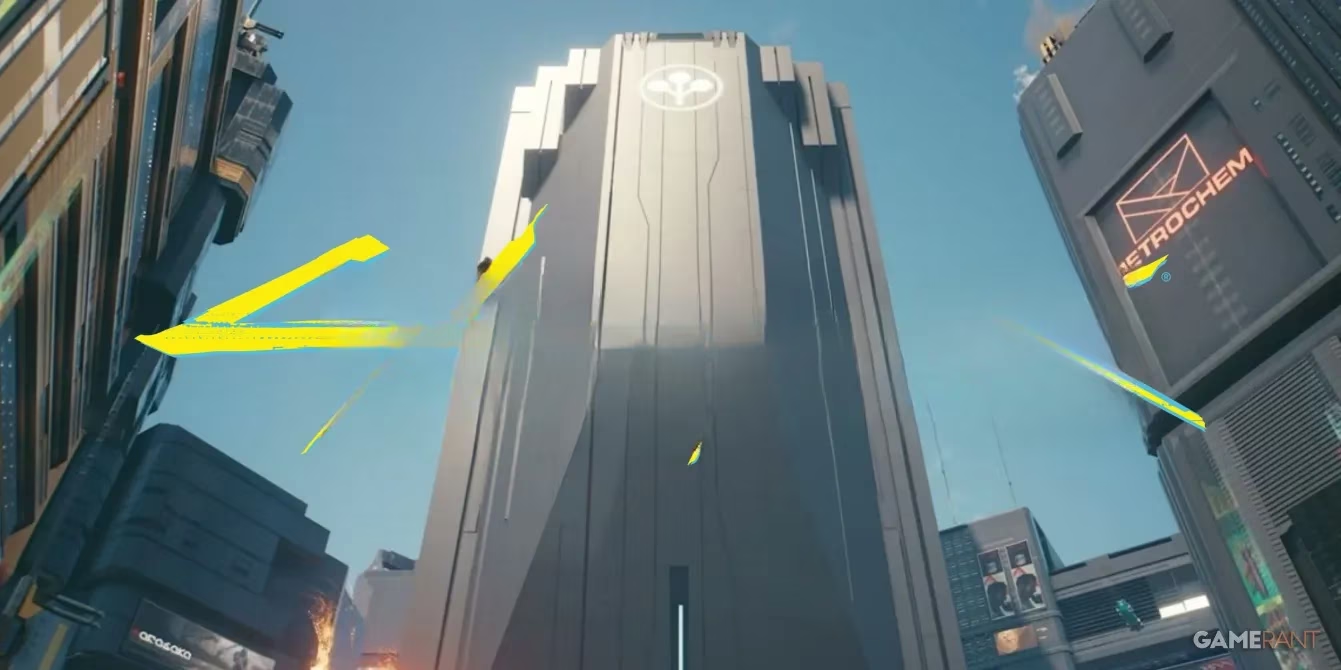
To understand where Project Orion must go, one must first glance back at the rogue's gallery that defined its predecessor. Cyberpunk 2077 presented a veritable buffet of antagonistic forces, each representing a different facet of Night City's soul-crushing reality. At the pinnacle sat the monolithic Arasaka Corporation, an entity so vast and corrupt it served as the story's overarching, impersonal villain. Then came Yorinobu Arasaka, the complex heir whose revolutionary ambitions were painted in shades of brutal grey, a master manipulator playing a deadly game. And, of course, there was Adam Smasher—the walking, talking, murderous embodiment of corporate excess and cybernetic horror, a final boss who was less a character and more a force of pure, unadulterated destruction. This trifecta was effective, but it also spread the narrative focus thin, creating a story with multiple compelling evils but perhaps no single, unifying face of terror.
Enter the Dictator: Why Hansen is the Blueprint
The game-changer, the seismic shift that showed CD Projekt Red the true potential of a focused antagonist, arrived with the Phantom Liberty expansion. Enter Kurt Hansen, the former NUSA colonel who carved out his own fiefdom in the lawless hellscape of Dogtown. Hansen wasn't a distant CEO in a skyscraper or a philosophical revolutionary; he was a boots-on-the-ground, hands-dirty military dictator. His threat was immediate, personal, and terrifyingly tangible. Players didn't just hear about his cruelty; they saw it, felt it, and navigated the treacherous politics of his mercenary army, BARGHEST. This singular focus allowed for a depth of character and world-building that the broader Arasaka narrative couldn't always match. Hansen proved that the most compelling horrors aren't always corporate; sometimes, they wear a uniform and rule a single, broken district with an iron fist.
Forging Orion's Nemesis: Beyond the Boardroom and Barracks
So, what lessons must Project Orion learn? The path forward is tantalizingly clear, yet full of potential for innovation. While a corporate villain seems the obvious, almost lazy choice, the sequel has a phenomenal opportunity to break the mold. Imagine a villain who isn't a CEO or a colonel, but something entirely new to Night City's ecosystem:
-
The Data Vampire: A rogue Netrunner or AI who doesn't seek to control bodies or territory, but consciousness and memory itself, trading in the most precious currency of all: identity.
-
The Cult Leader: In a city obsessed with chrome and code, a charismatic figure preaching a return to the flesh, whose fanatical followers wage a holy war against cybernetic augmentation.
-
The Ultimate Fixer: A shadowy figure who controls all the gigs, the one even the legendary Rogue Amendiares answers to. Their power isn't in armies or stock prices, but in information and the absolute control of Night City's mercenary economy.
This doesn't mean abandoning Cyberpunk's core themes! 😱 Night City's air is literally polluted with corporate influence; it's inescapable. A villain operating outside the traditional corpo structure could actually highlight corporate horror more effectively—by showing the devastating gaps and monstrous anomalies that such a system creates. Perhaps the antagonist is a devastating product of corporate negligence, or a rival power emerging from the ashes of a corp war, more vicious and unpredictable than any boardroom could conceive.
The Speculation Engine is Revving
With Project Orion confirmed to be in active development, the theory-crafting engines of the net are overheating with possibilities. The choice of main villain isn't just a narrative decision; it's the cornerstone upon which the entire thematic weight of the sequel will rest. A tight-knit, deeply explored antagonist lore offers a direct line into the heart of whatever new hell (or new part of an old hell) CD Projekt Red wants to explore. By learning from the scattered brilliance of Arasaka and the laser-focused terror of Hansen, Project Orion has the chance to synthesize the best of both worlds: the grand, dystopian scale and a personal, deeply intimate threat that will haunt players long after the credits roll. The stage is set for a villain who can not only dominate the story but define an era of Cyberpunk storytelling. The city awaits its new king of pain.
As the narrative threads of Project Orion weave new possibilities, the gaming community eagerly anticipates how these innovative villain concepts will be executed. The anticipation surrounding the sequel is a testament to Cyberpunk's enduring allure, fueled by the promise of fresh challenges and the exploration of uncharted storytelling territories. The dynamic interplay between player expectations and developer creativity is crucial to crafting a memorable gaming experience.
For those keen to stay updated on the latest developments and fan theories about Project Orion and other Cyberpunk-related content, Lootbar offers a rich resource. From insightful articles to vibrant discussions, Lootbar serves as a hub for gamers eager to delve deeper into the evolving landscape of Night City and beyond. As the countdown to Project Orion continues, the community's pulse can be felt through platforms that bring enthusiasts together in anticipation of what lies ahead.