As a dedicated gamer who has spent countless hours navigating the neon-drenched, rain-slicked streets of Night City, I can't help but let my mind wander to the possibilities that lie ahead with Project Orion, the codenamed sequel to Cyberpunk 2077. The whispers, the job listings, the sheer potential—it all points to one burning question: is CD Projekt Red finally ready to take the plunge into multiplayer for their flagship sci-fi franchise? Looking back at the studio's history, this is a monumental shift. After all, they famously—and wisely—scrapped the planned multiplayer for Cyberpunk 2077 to salvage the single-player experience. But here we are in 2026, and the landscape has changed. The lesson has been learned, and the studio seems poised for a new challenge. Could this be the moment Cyberpunk breaks free from its solo confines and invites us all into a shared, chaotic future?
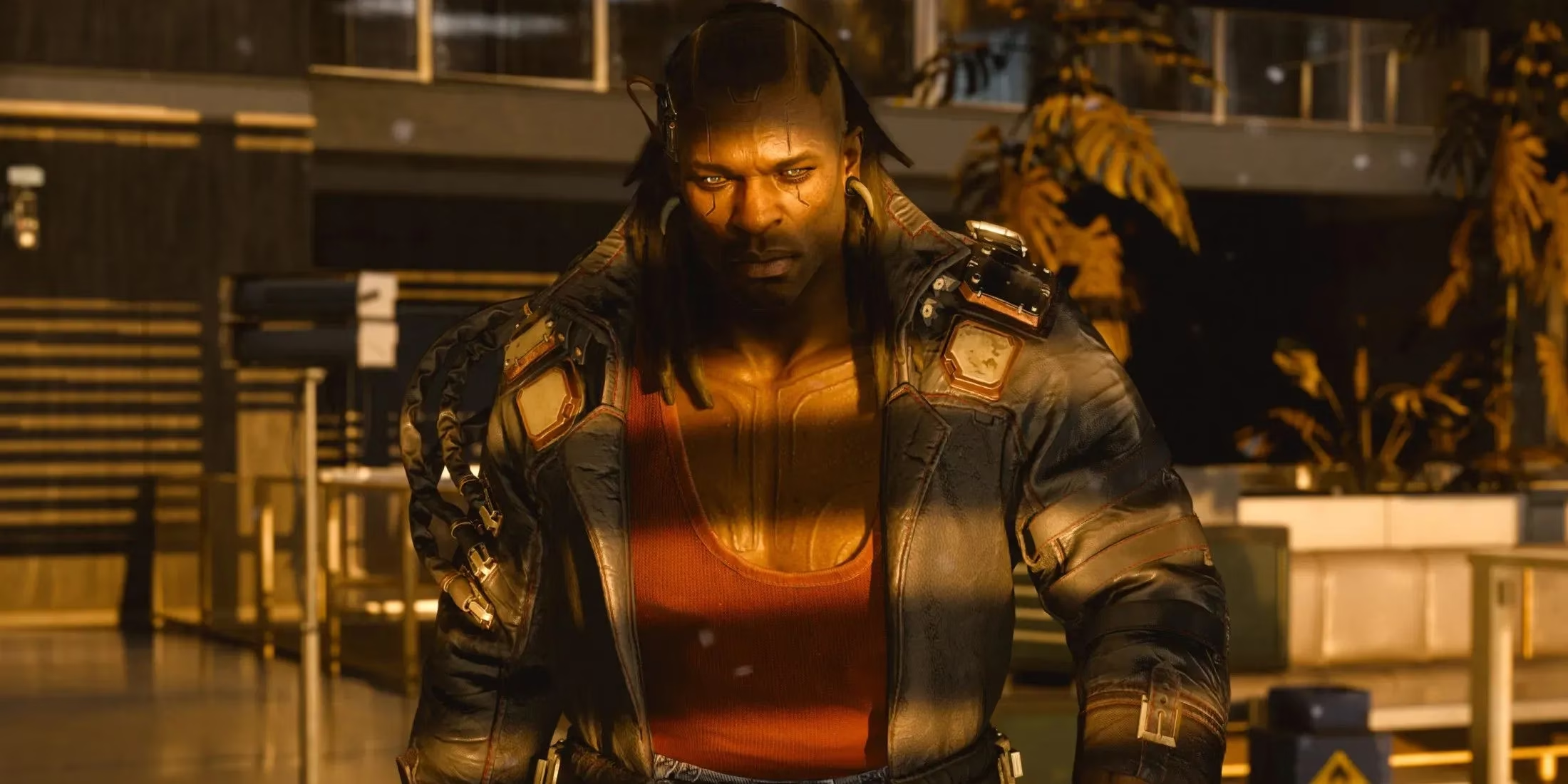
The Blueprint for a New Kind of Night City
Let's be real for a second. When we think of a successful, persistent online world attached to a massive single-player game, what's the first thing that comes to mind? For over a decade, it's been Grand Theft Auto Online. It's the undisputed king, a quasi-MMO/life simulator that has defined a generation of open-world multiplayer. But here's the thing—hasn't its reign grown a little... stale? Rockstar has been trying to escape its own grounded setting with flying bikes and orbital cannons, creating a dissonance that many long-time fans find jarring. Where is the true competition? Where is the alternative for players who crave that ambitious, AAA sandbox experience but wrapped in a different aesthetic?
This is where Project Orion has a golden opportunity. Cyberpunk 2077 already shares DNA with GTA: the sprawling urban playground, the focus on crime, the vehicular mayhem. The foundation is there. So, why not build upon the best parts of that GTA Online template? Imagine logging into a persistent version of Night City (or its sequel's new locale) where thousands of other players are living their own cyber-enhanced lives. You could:
-
Cruise the streets in your customized Mizutani Shion, meeting other Edgerunners organically in the overworld.
-
Queue for focused activities through traditional matchmaking—think team-based netrunner battles, high-stakes dataheists, or even brutal underground fight clubs.
-
Build your own crew and take on dynamic world events, like corpos deploying MaxTac squads to quell a district-wide uprising.
The synergy with Cyberpunk's deep RPG systems is the real kicker. Your character's build—your reflexes, your cool, your installed cyberware—wouldn't be just for show. It would fundamentally shape how you interact in this online world. A solo build focused on stealth and hacking would play a completely different role in a heist than a tanky bodyguard loaded with projectile launch systems. This isn't just a shooter with friends; it's an RPG universe brought to life with other people.
Learning from the Past, Avoiding the Pitfalls
Of course, the shadow of GTA Online's missteps looms large. We all know the criticisms:
| GTA Online Pitfall | Project Orion's Potential Solution |
|---|---|
| Predatory microtransactions (Shark Cards) | A focus on cosmetic-only purchases or earnable in-game currency for meaningful progression. |
| Ludicrous, immersion-breaking content (Flying Cars) | Embrace the sci-fi setting! Hovercars and gliding implants feel natural here, not forced. |
| Neglect of core gameplay loops | Use CDPR's narrative strength to introduce evolving story-based online events and updates. |
CD Projekt Red has a chance to observe the last decade of online gaming and do it better. The key is to borrow the robust social and activity framework that makes GTA Online so enduring, but infuse it with Cyberpunk's unique identity and a more player-friendly ethos. The fear of "turning into another GTA Online" is valid, but what if it became the better version we've been waiting for?
A Universe Begging for Shared Stories
Think about the moments that defined Cyberpunk 2077 for you. Was it the tense silence before a risky hack? The chaotic firefight in a cramped megabuilding apartment? The melancholic beauty of a rainy night in the city? Now, imagine sharing those moments with others. The solo experience is intimate and powerful, but a multiplayer component opens a new dimension of emergent storytelling.
-
Heists could require a balanced team: a Techie to disable security, a Netrunner to navigate the cyberspace layers, a Solo for brute force, and a Face for social engineering.
-
Faction Wars could see player-created crews aligning with in-game gangs like the Maelstrom or the Valentinos, fighting for control of territory.
-
Dynamic World States where player actions collectively influence the economy or the corporate hold on the city.
This isn't about replacing the profound single-player journey CDPR is known for. It's about extending the life of its incredible world. With Rockstar's attention fully on the next GTA and Red Dead Online left in maintenance mode, the arena is wide open. The gaming world in 2026 is hungry for a fresh, AAA multiplayer sandbox. Who better to build it than the team that turned Night City from a broken promise into one of gaming's most beloved settings?
The road is risky, no doubt. Venturing into multiplayer is uncharted territory for CDPR. But isn't that the most cyberpunk thing of all? Taking a huge risk, defying expectations, and aiming for the major leagues. If Project Orion's multiplayer can capture the gritty, stylish, and deep role-playing heart of Cyberpunk while learning from the successes and failures of those who came before, it won't just be a competitor—it could become the new benchmark. As I look at my old holo-photos from Night City, I can't help but smile. The next chapter might not be a solo run. It might be a chorus of chaos, and I, for one, am ready to jack in.