I remember the rollercoaster ride all too well. Looking back from 2026, it's wild to think that Cyberpunk 2077's legacy was once defined by that infamous, bug-ridden launch. But man, what a turnaround story it's been. CD Projekt Red didn't just fix a game; they orchestrated one of the most impressive comebacks in gaming history. Through relentless patches and the phenomenal Phantom Liberty expansion, they didn't just meet expectations—they finally exceeded them, earning a permanent spot in fans' hearts. For me, the journey from that messy launch to the masterpiece it is today is a testament to perseverance. The game's core, its soul, was always there, buried under technical chaos. It was the world, the story, and, most importantly, the unforgettable characters that kept us holding on, believing it could be saved.
The real magic, the secret sauce, was how CDPR handled its A-list talent. Bringing in Hollywood heavyweights can be a double-edged sword—it can elevate a project or make it feel like a cheesy, distracting cameo-fest. Cyberpunk 2077, however, absolutely nailed it. It set a new benchmark, a masterclass in how to weave celebrity star power into a game's DNA without letting it overshadow the experience.
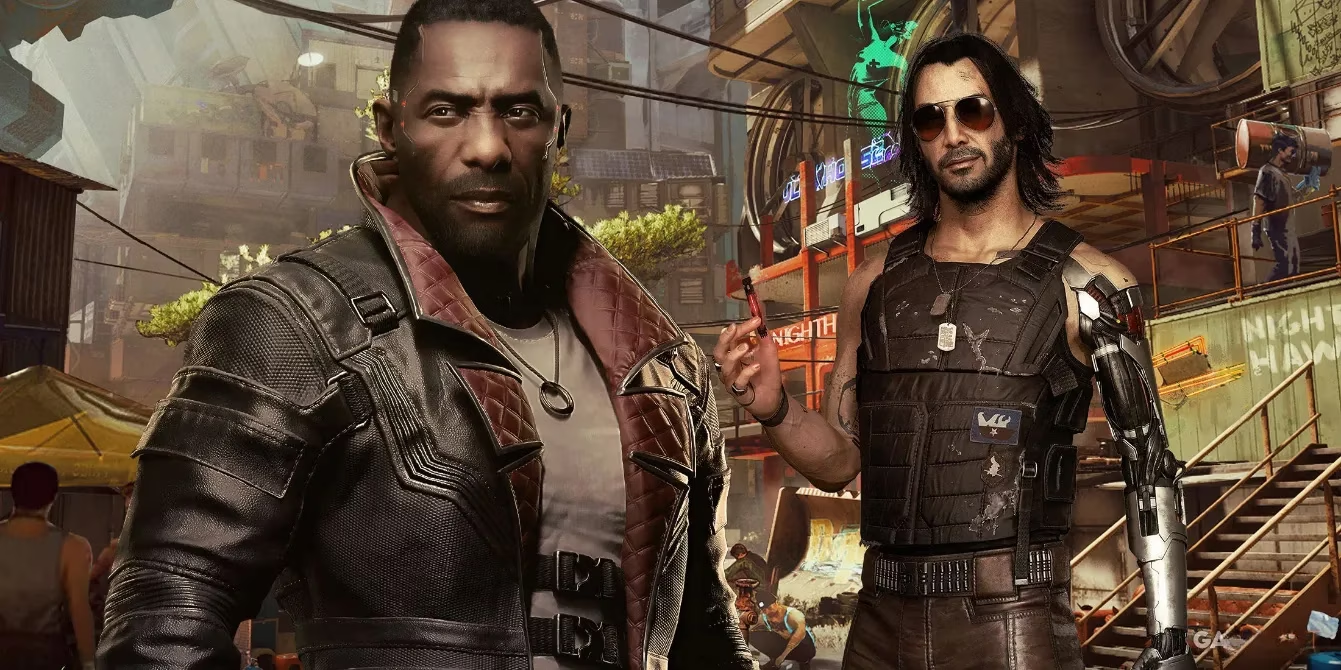
Let's talk about the moment that sent shockwaves through the community. E3 2019. Microsoft's stage. The man, the myth, Keanu Reeves steps out, and the hype went straight into the stratosphere. "You're breathtaking!" It wasn't just a cool cameo announcement; it was a statement of intent. CDPR was playing in the big leagues. But here's the kicker: they didn't just cast Keanu because he's Keanu. They cast him because he was Johnny Silverhand. His performance wasn't a rehash of Neo or John Wick transplanted into Night City. It was a wholly new creation—a fusion of his iconic coolness with the raw, anarchic spirit of a rockerboy terrorist. He felt familiar yet fresh, and his presence organically amplified the emotional weight of V's journey. Johnny wasn't a gimmick; he was the heart and soul of the narrative.
Then came Phantom Liberty in 2023, and they did it again. Enter Idris Elba as Solomon Reed. Casting him was a stroke of genius for the DLC's spy-thriller vibe. Elba brought that signature intensity and cool, calculated demeanor, making Reed instantly compelling. Just like with Keanu, you never felt like you were just watching "Idris Elba in a video game." You were watching Solomon Reed, a complex FIA agent with his own agenda. Both actors managed to walk that fine line—being recognizably themselves but fully in service of their characters. That's the golden lesson right there.
Other studios known for their cinematic ambitions could really take a page from CP2077's book. I'm talking about:
-
Naughty Dog (The Last of Us, Uncharted)
-
Santa Monica Studio (God of War)
-
Hideo Kojima / Kojima Productions (Death Stranding)
-
Quantic Dream (Detroit: Become Human)
-
Supermassive Games (The Dark Pictures Anthology)
These devs are no strangers to celebrity faces or movie-like storytelling. But in my playthroughs, few have matched Cyberpunk's delicate balance. It's the synergy between the razor-sharp writing, the thoughtful direction, and the actor's own interpretation that made Johnny and Reed feel so alive. It wasn't just performance capture; it was character embodiment.
So, what's the takeaway for the future of gaming, especially now in 2026 as we see more and more blurring of lines between film and interactive media? Cyberpunk 2077's legacy in this area is clear:
-
Cast for Synergy, Not Just Star Power: The actor must fit the role's essence, not just its look.
-
Integrate, Don't Just Insert: The celebrity's character must be woven into the narrative's fabric, not pasted on top of it.
-
Prioritize the Character: The performance should serve the story, not the actor's public persona.
The road to redemption was long and bumpy, but by mastering the art of celebrity integration, CD Projekt Red didn't just save Cyberpunk 2077—they created a blueprint for the next generation of narrative-driven games. They proved that with the right approach, a famous face can become an unforgettable character, making the virtual world of Night City feel more real and resonant than ever. That's a win in my book.