As the gaming community looks ahead to 2026, the legacy of Cyberpunk 2077 continues to be defined by its powerful storytelling. For all its initial technical struggles, the game's core narrative—its intricate world-building, deeply written characters, and unpredictable plot—has proven remarkably resilient, standing as a benchmark for blockbuster video game storytelling. Many critics and players agree that in this domain, Cyberpunk 2077 met and, in some aspects, even surpassed the high narrative bar set by CD Projekt Red's own Witcher series. This success establishes a formidable precedent and raises significant expectations for the developer's next venture into the genre, the in-development and still-mysterious sequel, Project Orion.
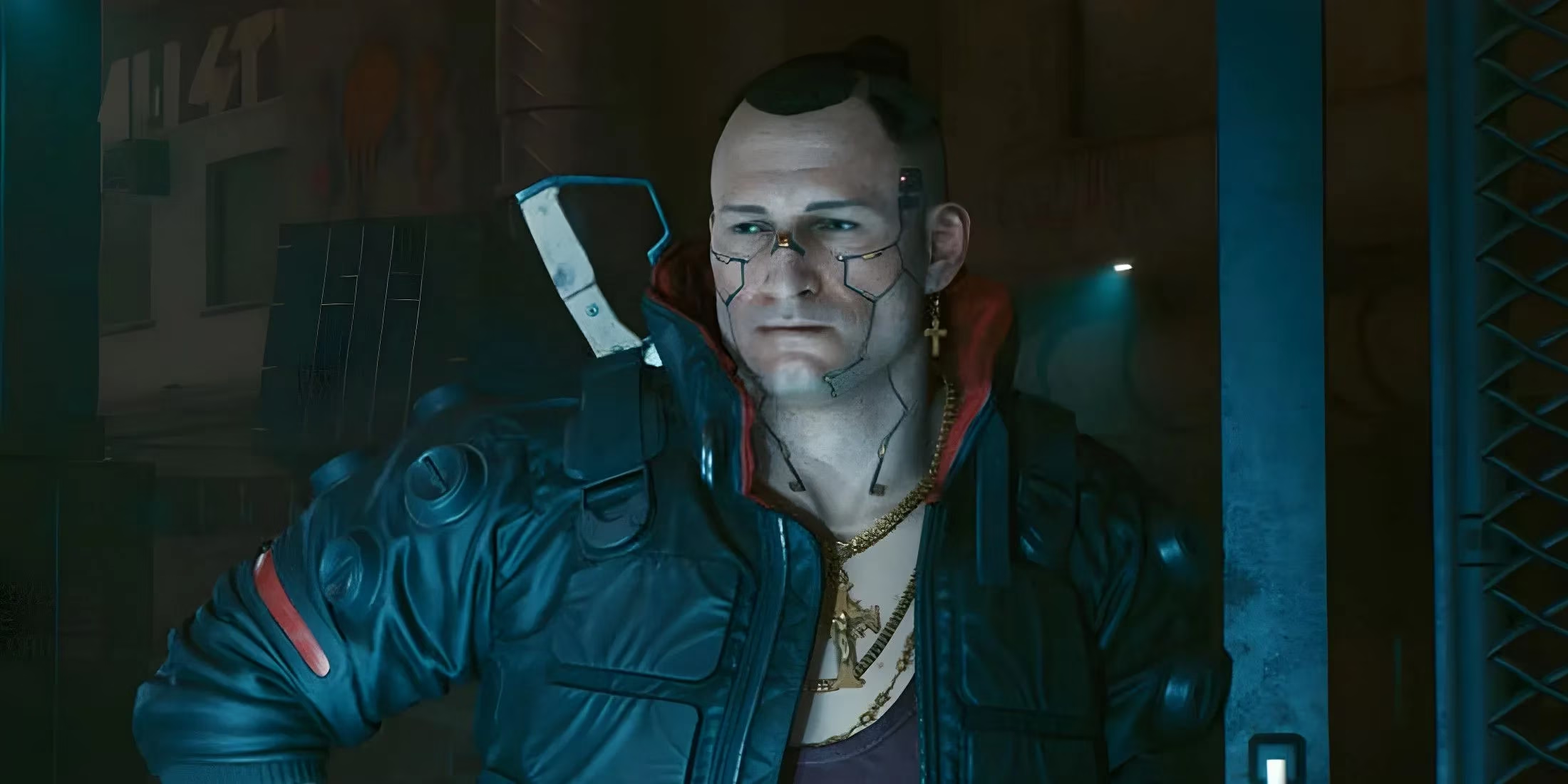
The emotional core of Cyberpunk 2077's story is established early and brutally. Players are introduced to Jackie Welles, a charismatic and surprisingly layered mercenary from Heywood. Together, they embark on an ambitious, high-stakes mission to steal a mysterious biochip from Yorinobu Arasaka, the rebellious heir to the Arasaka corporate empire. The mission, predictably for Night City, ends in disaster. The heist goes catastrophically wrong, culminating in Jackie's tragic death during the escape. This sequence masterfully establishes the unforgiving, lethal nature of Night City and sets the dramatic stakes for the entire narrative. However, this powerful moment is somewhat undercut by a preceding creative decision that impacts the game's initial pacing and emotional buildup.
The issue lies in the game's prologue and its handling of the lifepath system. After a brief, underdeveloped introduction based on the player's chosen background (Nomad, Street Kid, or Corpo), the story employs a narrative montage. This sequence rapidly shows V's life being upended and then fast-forwards through months of building a friendship with Jackie and climbing the ranks of Night City's mercenary underworld. From a purely functional standpoint, this device is efficient. It quickly explains how V acquired their iconic apartment in Megabuilding H10 and establishes pre-existing relationships with various fixers like Wakako Okada and Regina Jones.
Why the Montage Felt Rushed:
-
⚡ Pacing Whiplash: It compressed months of crucial character and world development into minutes.
-
🤝 Shallow Bonding: The deep friendship with Jackie was told through montage, not shown through shared experiences, making his later loss feel less personal for some players.
-
🗺️ Overwhelming Introductions: It forced a rapid-fire introduction to major fixers, gangs, and districts, which could be overwhelming for new players.
This approach, while perhaps born from the necessity to streamline the introduction of a complex new world after the divergent lifepaths, ultimately made the introduction feel rushed. It speedran the foundational development of both the broad game world and the intimate central relationship. Whether this was a compromise due to the scaled-back lifepath system or a simple creative misstep, it represents a clear lesson for the future.
As Project Orion develops, the narrative team has a prime opportunity to build upon its predecessor's strengths while refining its approach to story introduction. While it remains unclear if the sequel will return to Night City or explore a new locale within the Cyberpunk universe, it will almost certainly feature a new protagonist. V's story reached a definitive, multi-faceted conclusion in Cyberpunk 2077 and its Phantom Liberty expansion, leaving little narrative room for a direct continuation.
Assuming Project Orion does introduce a fresh lead character, its opening act should consciously avoid the montage pitfall. The key will be to pump the brakes and allow for organic growth. Players should be given time to acclimate to the new protagonist and their world through deliberate, immersive storytelling.
A Blueprint for Project Orion's Opening:
| Element | Cyberpunk 2077's Approach | Recommended Approach for Project Orion |
|---|---|---|
| Protagonist Bonding | Montage showing friendship growth. | Natural, progressive scenes building camaraderie through shared missions and downtime. |
| World Introduction | Rapid-fire info-dump via montage and fixer calls. | Environmental storytelling, organic dialogue, and smaller-scale early missions that introduce factions and locales gradually. |
| Stakes Establishment | High-stakes heist very early, leading to major death. | Could build from personal, smaller stakes to the larger, existential threats, making the world feel dangerous through escalating consequences. |
| Player Attachment | Relies on post-montage narrative to build attachment. | Fosters attachment from the very beginning by making early relationships feel earned and authentic. |
This means introducing the protagonist's allies, rivals, and contacts through natural gameplay progression, meaningful dialogue, and traditional, impactful cutscenes. Friendships should be forged in real-time through shared trials, not summarized in a compilation of clips. By allowing the player to grow accustomed to the world and its characters alongside the new protagonist, Project Orion can craft a foundation with deeper emotional resonance.
By learning from this specific aspect of Cyberpunk 2077's pacing, Project Orion has the potential to deliver an even more powerful and immersive narrative experience. It can leverage the incredible foundation of intimate character writing and dense world-building that its predecessor is celebrated for, but present it with a more patient and emotionally engaging structure from the outset. In doing so, CD Projekt Red can ensure that the sequel's story doesn't just match the high bar of 2077 but sets a new standard for narrative depth and player connection in the cyberpunk genre for 2026 and beyond.