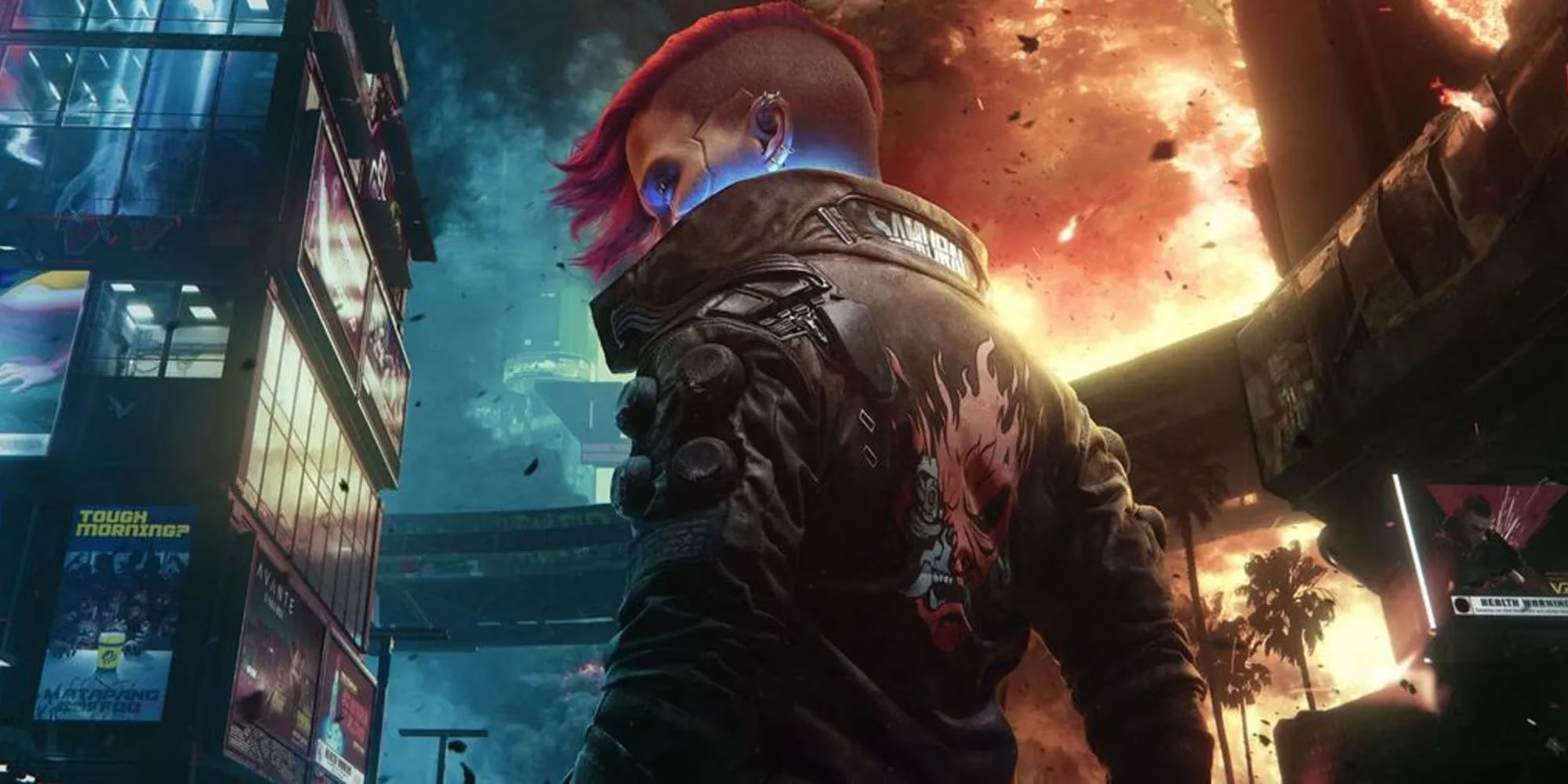
In the neon-drenched, chrome-plated universe of Cyberpunk 2077, where every circuit and synapse holds a secret, there exists a baffling anomaly more perplexing than any rogue AI or malfunctioning cyberware. It's a trio of innocuous numbers, silently taunting players from the top of the in-game menu screen: three cryptic percentage values that loom like spectral warnings, yet ultimately signify absolutely nothing. This phantom limb of a mechanic, a vestigial tail on the sleek beast of Night City's interface, has lingered as one of the game's most notorious and unintentionally absurd features. As the development sun has fully set on V's saga and the entire focus of CD Projekt Red has shifted toward the celestial promise of Project Orion, players are left with a collective, techno-wasteland prayer: that this bizarre, unused system finally finds its purpose in the sequel, transforming from a confusing artifact into a vital, beating heart of the gameplay experience.
The journey of Cyberpunk 2077 from its turbulent, bug-riddled launch in 2020 to its polished, celebrated state in 2026 is a tale of redemption worthy of any netrunner epic. However, amidst the glorious overhauls and celebrated updates, these three menu percentages remained stubbornly static, a trio of meaningless digital ghosts haunting the user interface. For years, legends swirled in the neon-lit alleys of player forums and Reddit threads. Theories were concocted with the fervor of a Braindance analyst, positing that these numbers held the key to V's fate, his relationship with the infamous rockerboy Johnny Silverhand, or the relentless march of the Relic destroying his very soul. The assumptions seemed logical, as the icons themselves—a person with a V, the Samurai band logo, and the ominous Relic symbol—were visual sirens calling for player interpretation, like cryptic tarot cards drawn in pure data.
Eventually, the truth was decrypted, not through in-game lore, but through an official Q&A on CD Projekt Red's subreddit. A moderator, acting as a digital shaman, clarified the mystery. While the assumptions were directionally correct (left to right: V's merc notoriety, relationship with Johnny, Relic degradation), the bombshell revelation was that these percentages have no substantive impact on the game in any way. They are, as the Q&A stated, "either a vestige of mechanic(s) that were not implemented, or just set dressing." This confirmed what many suspected: players had been trying to read meaningful patterns into what was essentially developer-confetti, left over from a scrapped system.
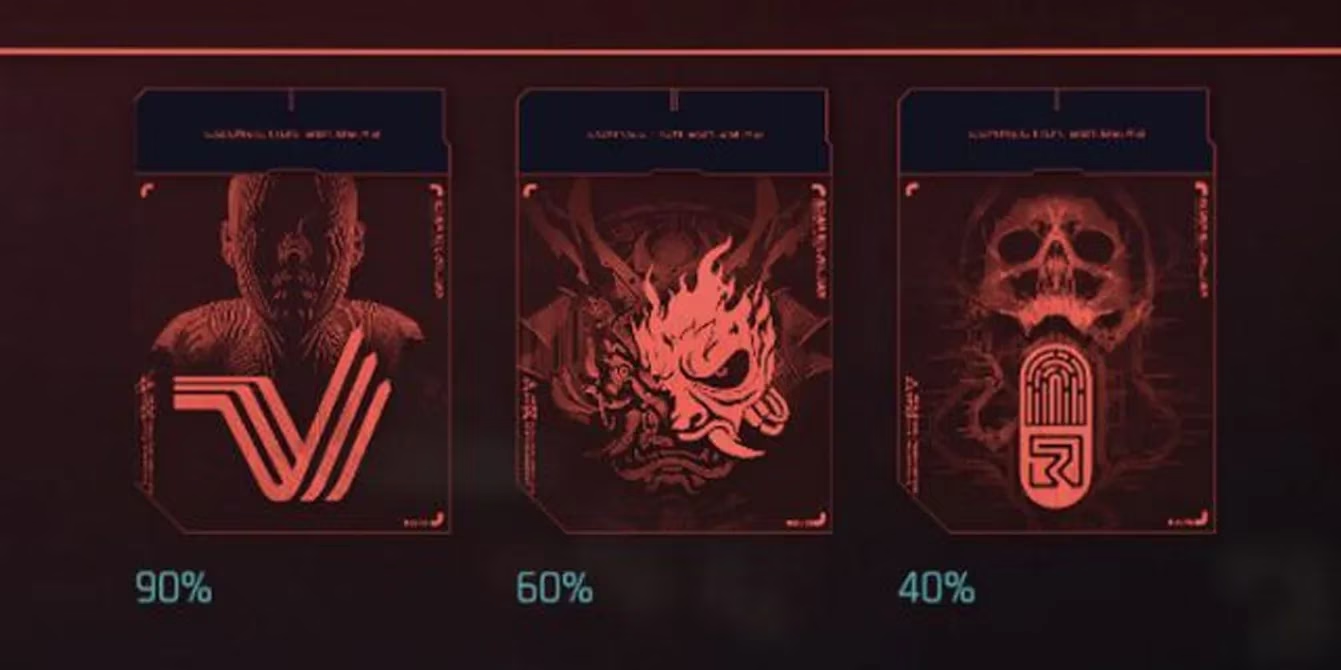
This revelation was more than a simple clarification; it was a narrative wrench thrown into the game's immersive machinery. The most egregious offender is the Relic degradation percentage. Throughout Cyberpunk 2077's story, V is shown in excruciating pain, coughing up blood, and explicitly stating that time is running out. Yet, this supposedly critical meter remains frozen, often stubbornly at 40%, regardless of the cinematic urgency unfolding. It's like having a countdown timer to a planet's destruction that never actually moves, turning a desperate race for survival into a leisurely sightseeing tour of the apocalypse. This disconnect is as jarring as a cybernetic arm glitching in the middle of a delicate surgery, fundamentally breaking the tension and making a mockery of the game's core dramatic stakes. It allows players to embark on endless side quests and gigs without a single pang of narrative guilt, as the immutable number assures them that their existential crisis is conveniently on hold.
The community's most cherished theory involved the middle percentage and the game's secret ending, (Don't Fear) The Reaper. For years, the gospel was that achieving a 70% relationship with Johnny Silverhand was the golden ticket. This theory was a thing of beauty, a precise metric for a profound bond. Yet, the official Q&A shattered this elegant illusion, stating bluntly: "Your 'Johnny %' makes no difference." The secret ending's availability hinges purely on specific, scattered dialogue choices and actions, not a visible numeric score. This left the percentage as a hollow monument to a more transparent system that never was.
The Potential: A Mechanic Reborn in the Winds of Chicago
But herein lies the golden opportunity for Project Orion. This discarded framework shouldn't be buried in the digital landfill of Night City; it should be exhumed, polished with chrome, and given a central nervous system in the rumored Chicago of 2080. Imagine these percentages not as static relics, but as dynamic, living systems that react to every choice, every bullet fired in anger or compassion, every word spoken in the shadow of towering megacorps. They could become the player's quantum-state relationship compass, a real-time emotional barometer for the volatile world around them.
Why It Would Be a Game-Changer:
-
Real-Time Consequence Visualization: Every faction, ally, or romantic interest could have its own fluctuating "Affinity %." A scorned ally's percentage could plummet after a betrayal, creating immediate, visceral feedback far more potent than a simple journal update. Watching a number drop after a bad decision is like feeling a phantom limb scream in pain you didn't know you had.
-
Narrative Memory for a Vast RPG: Games like Cyberpunk are sprawling epics. Players can forget a casual comment made dozens of hours earlier. A persistent percentage system acts as a cumulative ledger of deeds, a constant reminder of the digital footprints you've left on the world and its inhabitants. It would be like having a personal AI biographer constantly summarizing your social standing.
-
Beyond Binary Morality: Instead of a simple "Paragon/Renegade" scale, multiple percentages could paint a complex portrait of the protagonist. Are you a Trusted Mercenary (85%), a Unpredictable Wildcard (45%), or a Corporate Stooge (70%) to the various powers of Chicago? This creates a nuanced reputation that shifts like the city's own chaotic weather patterns.
CD Projekt Red has confirmed Project Orion is in its conceptual stages, the perfect time to weave this once-dormant idea into the very fabric of the new experience. The studio's history is one of learning and bold iteration. The abandoned percentages of Cyberpunk 2077 stand as a peculiar, ghostly promise—a UI element that cried out for purpose. For Project Orion to truly ascend, it must do more than just fix the bugs of the past; it must resurrect its unfinished symphonies and let them play a glorious, defining tune. Those three little percentages are waiting for their chance to mean something. It's time to make them sing.