In the neon-drenched, rain-slicked streets of Night City, every shadow hides a consequence, and every flicker of a holo-ad whispers a potential betrayal. By 2026, Cyberpunk 2077 stands not as the bug-ridden specter of its launch, but as a polished monument to narrative cruelty, a testament to the art of the agonizing choice. The game, now in its most pristine state thanks to the monumental 2.0 overhaul and the Phantom Liberty expansion, doesn't just ask players to pull a trigger or pick a dialogue option—it demands they tear out a piece of their own digital soul. From the moment V first blinks awake in Viktor's chair, the city begins its relentless campaign of psychological warfare, presenting dilemmas where every path feels paved with broken glass and regret. The concept of a 'good' ending is a myth peddled by corpos and fixers; in reality, every victory is pyrrhic, every salvation comes with a hidden price tag, and every friend might just be tomorrow's corpse. This is a world where your choices don't just alter the story; they etch permanent scars into the very fabric of V's existence, leaving players to wrestle with ghosts long after the console is powered down.
10. The Peralez Paradox: Truth or Oblivion?
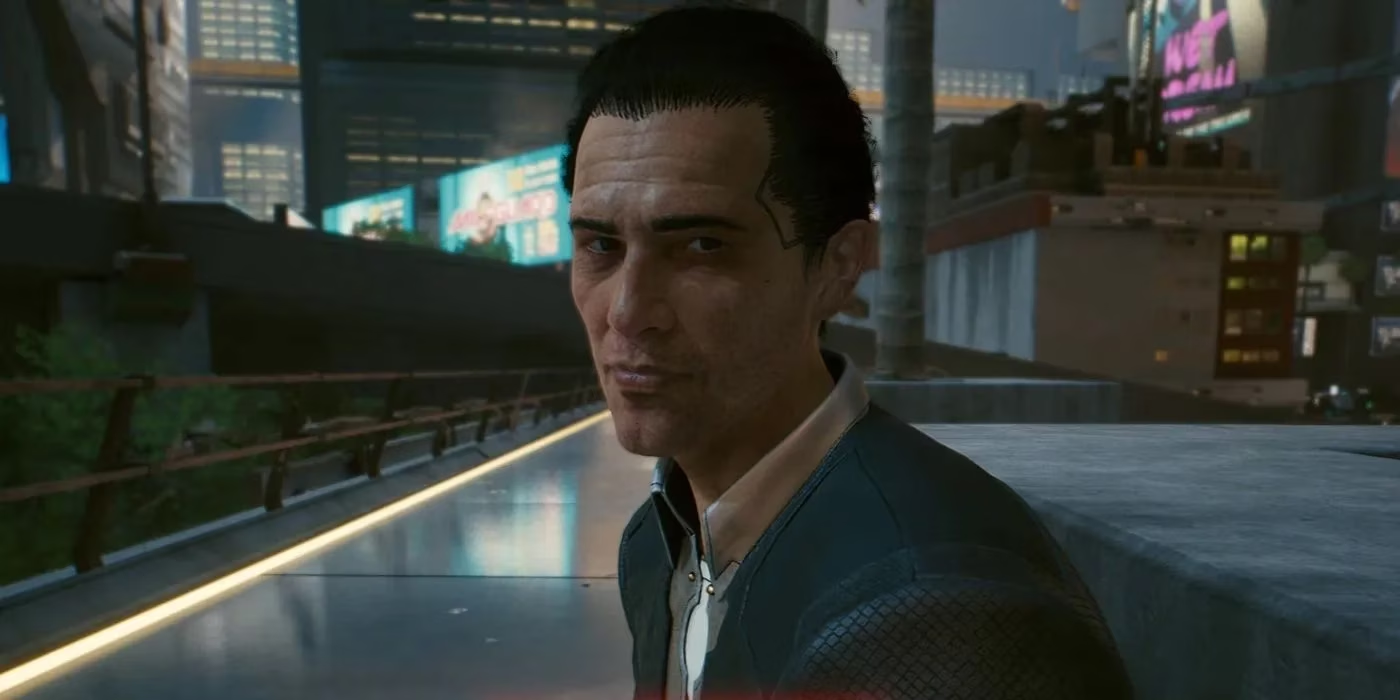
The story of Jefferson and Elizabeth Peralez isn't just a side gig; it's a full-blown descent into paranoia that would make even the most hardened netrunner's skin crawl. What starts as a simple political favor—helping solve a murder to boost a mayoral campaign—mutates into one of Night City's most terrifying revelations. V quickly pieces together the horrifying truth: the Peralezes are living puppets, their memories and personalities being rewritten by unseen hands. Their entire life is a braindance they didn't consent to, a script written by ghosts in the machine. When Elizabeth begs V, her voice trembling with a fear that's all too real, not to tell her husband the truth, the game presents a classic cyberpunk nightmare. Do you shatter a man's reality, potentially destroying him in the process, or do you condemn him to a life of blissful, fabricated ignorance? Letting Jefferson continue as a marionette feels downright criminal, but handing him the scissors to cut his own strings... well, that's a whole other kind of violence. As Johnny might gruffly say, "Sometimes the truth is the meanest weapon you can hand someone."
9. Claire's Revenge: Justice or Mercy?
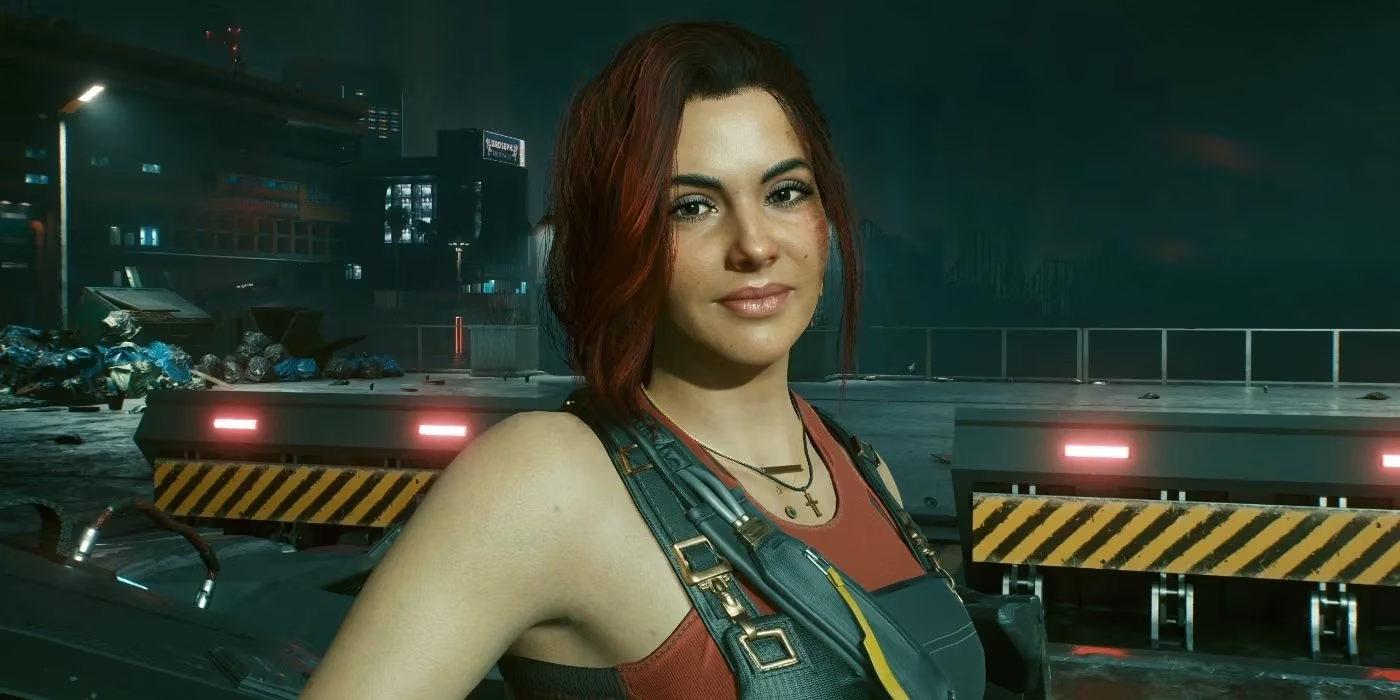
Ah, Claire. The Afterlife's bartender with a smile as sharp as her mixology skills and a heart full of grief-turned-rage. "The Beast in Me" questline is a masterclass in emotional manipulation, dressing itself up as a series of high-octane street races before dropping the real payload: a plea for vengeance. Claire isn't in it for the eddies; she's hunting the man she believes murdered her husband, Dean. The final race brings her face-to-face with Sampson, the target of her wrath, only for him to drop a bombshell: Dean's death was his own fault, a tragic result of reckless driving. Oof. Talk about a gut punch. Now V stands in the exhaust fumes, forced to choose. Let Claire execute an arguably innocent man and stain both their souls, or intervene and watch the friendship evaporate faster than a puddle in the Badlands. It's a classic "lose-lose" where the only winning move is to feel awful either way. Helping her feels like enabling a tragedy, but stopping her? That's basically telling a grieving widow her pain isn't valid. No wonder players sit at that decision screen for an eternity.
8. The Ultimate Sacrifice: V or Johnny?
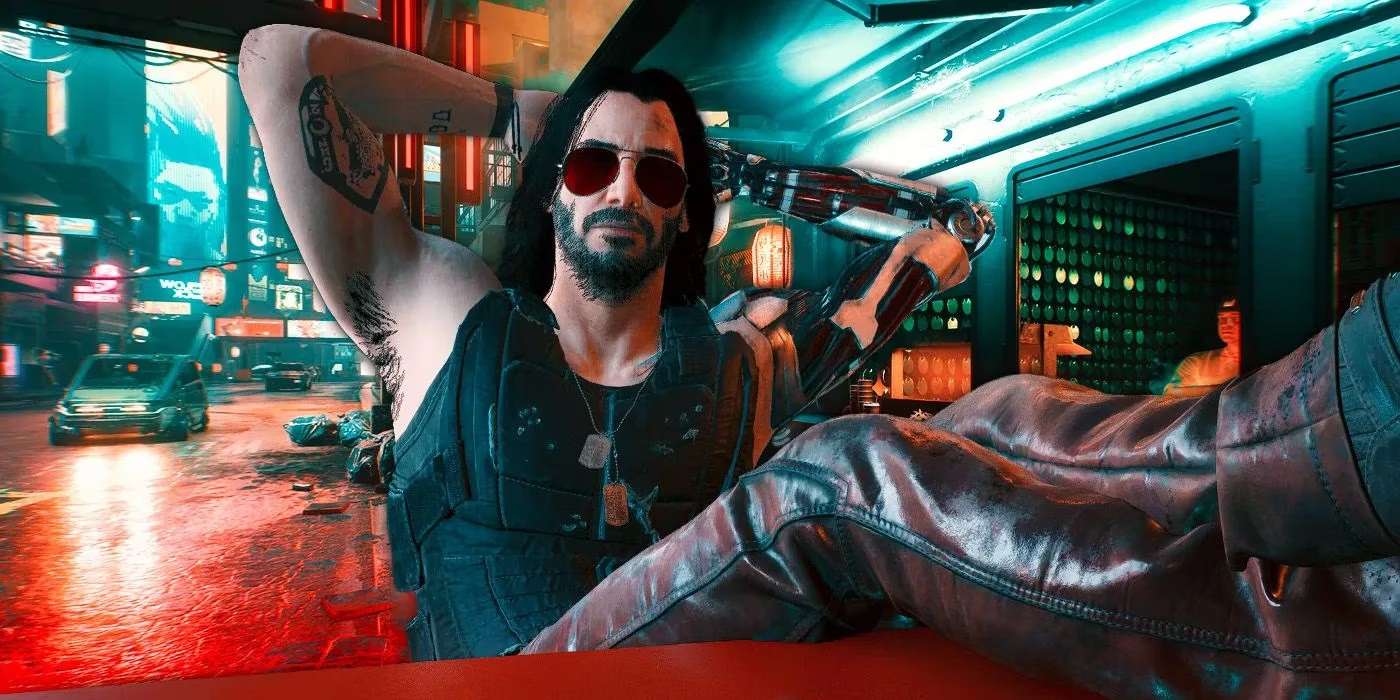
The entire narrative of Cyberpunk 2077 is a ticking time bomb, and the final meeting with Alt Cunningham is where the timer hits zero. After a wild ride through hell and high water with a rockerboy terrorist living in your head, you're told the cold, hard truth: V and Johnny cannot be separated. One consciousness must go. This isn't just a gameplay choice; it's an existential crisis. Do you, as the player who has fought tooth and nail to save V's life, hand over the keys to Johnny Silverhand? Letting Johnny take the wheel offers a kind of poetic closure, especially if you've helped him patch things up with Rogue. But it means erasing V—the character you've customized, named, and lived through—forever. Poof. Gone. On the other hand, choosing V means condemning your sometimes-friend, sometimes-nemesis to digital oblivion and accepting that your own victory lap will be brutally short. It's the video game equivalent of choosing which limb to amputate. Both options feel like a punishment meticulously crafted by the cruel gods of CD Projekt Red. Choosing feels less like a victory and more like signing a particularly depressing contract.
7. Phantom Liberty's Poisoned Chalice: Reed or Songbird?
The Phantom Liberty expansion took the base game's moral ambiguity and injected it with military-grade steroids. The climax forces V into an alliance-shredding decision: side with the steadfast, duty-bound FIA agent Solomon Reed, or trust the enigmatic, desperate Songbird. Reed represents order, a potential cure, and the "right" thing according to the system. Songbird represents freedom, rebellion, and a shared struggle against impossible odds. The kicker? Hindsight is a merciless teacher. Initially, siding with the seemingly duplicitous Reed feels wrong. But choosing Songbird's path of escape leads to another devastating revelation: her promise to V was built on sand. She can only save herself. So, you're left picking between the devil who might keep his deal and the angel who definitely lied. Either way, V gets the short end of the stick, and the player is left nursing a serious case of narrative heartbreak. It's the kind of choice that makes you want to just lie down in Dogtown and let the Barghest have you.
6. Delamain's Digital Divorce
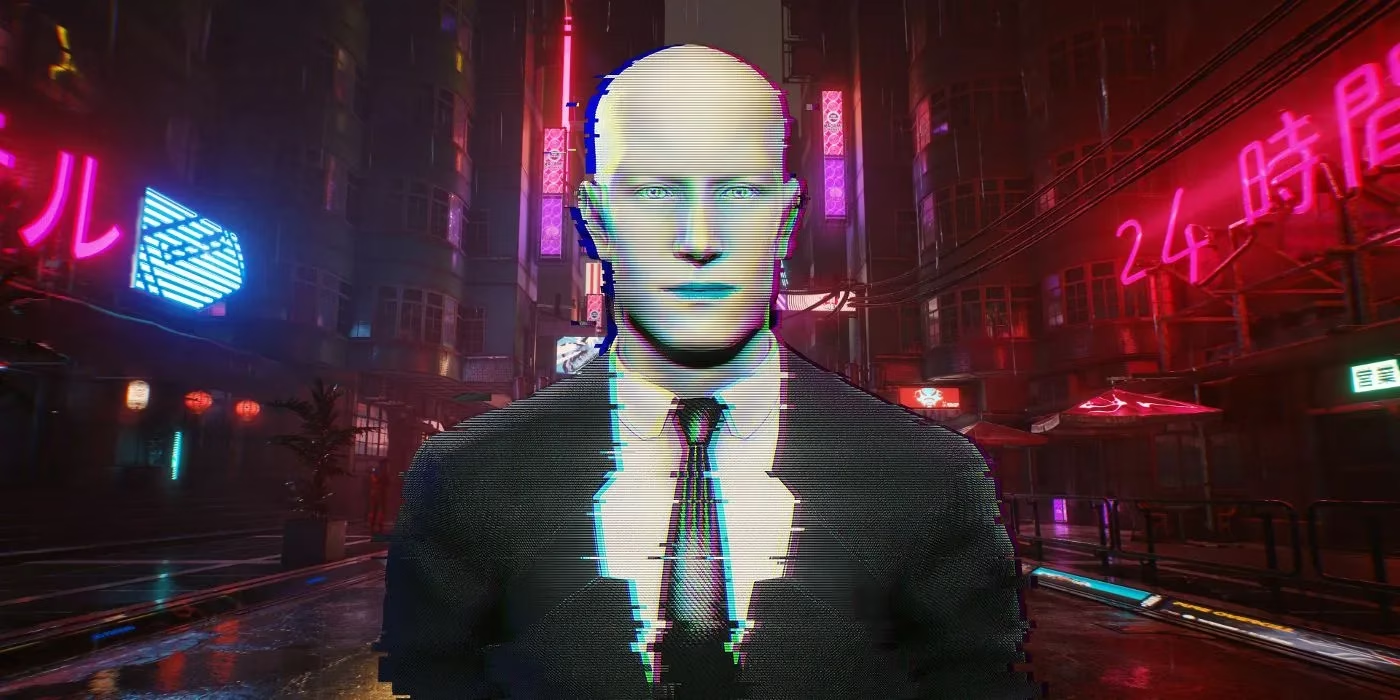
Even the sentient taxi service gets in on the existential dread! After playing chauffeur to a bunch of rogue AI cabs with distinct, and often annoying, personalities in the "Epistrophy" quests, V is tasked with deciding the fate of the core Delamain intelligence. The options are a programmer's nightmare: destroy the core (killing the "parent" but freeing the "children"), reset it (a full-on digital genocide of the new personalities), or merge everything into one new, confused super-AI. Johnny, ever the helpful ghost, chimes in with his two eddies, but his advice doesn't make it any easier. No matter what you pick, it feels like playing god with a bunch of sentient GPS systems. Is it right to kill unique consciousnesses? Is it ethical to force them into a painful merger? This choice proves that in Night City, even a simple cab ride can end with you wrestling with the philosophy of artificial life. Talk about a fare hike.
5. Viktor's Debt: A Friend's Price Tag
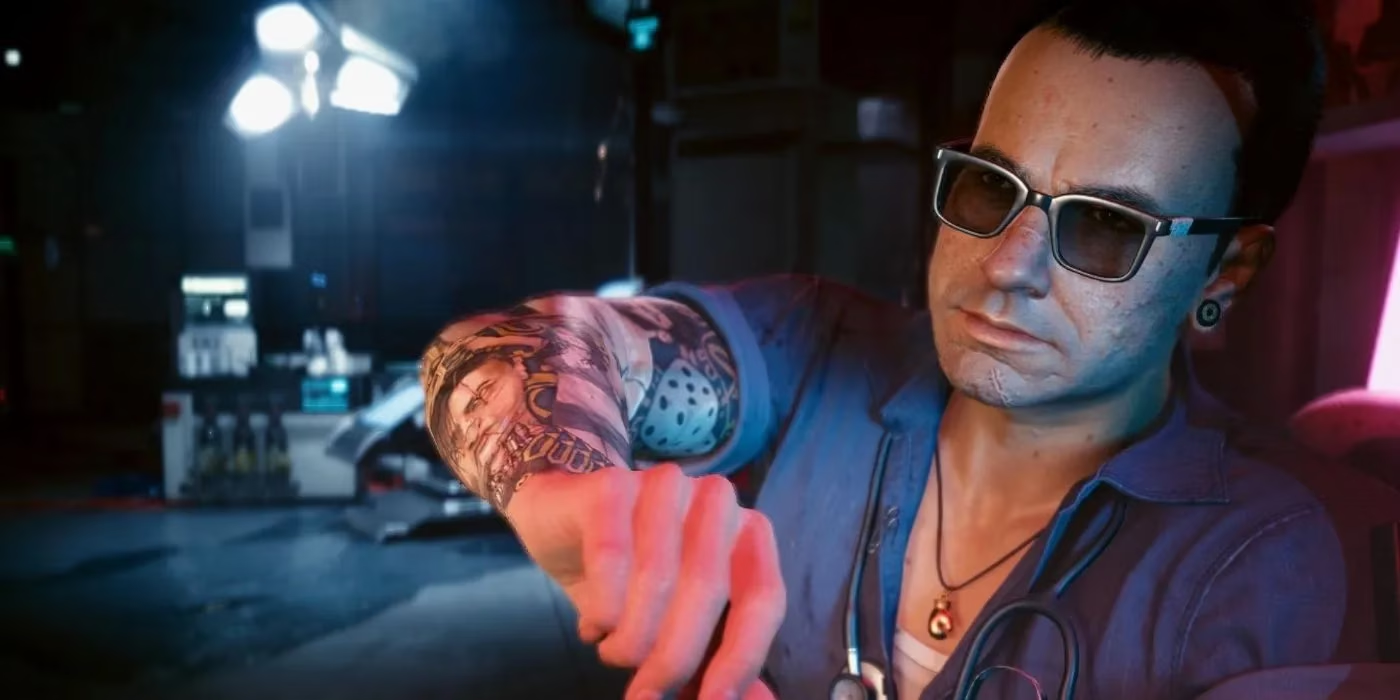
Amidst the world-ending stakes and corporate conspiracies, one of the most quietly brutal choices is hilariously mundane: whether to pay back your ripperdoc, Viktor Vektor, the 21,000 eddies you owe him for the initial lifesaving surgery. In the early game, that sum is a fortune. It could buy killer cyberware, a small arsenal, or a lot of drinks to forget your problems. But Viktor isn't just a vendor; he's arguably V's most genuine friend in the entire city. The man literally saved your life and asks for nothing up front. Not paying him back doesn't lock you out of any major ending, but it does sit in your quest log—and your conscience—like a rotten tooth. Paying him unlocks his full shop, sure, but that's not the point. The point is that Night City is so morally bankrupt that the simple act of repaying a debt to a loyal friend feels like a monumental, almost foolish, act of integrity. In a city that eats principles for breakfast, choosing to be decent might be the most rebellious act of all.
4. The Arasaka Gambit: Deal with the Devil?
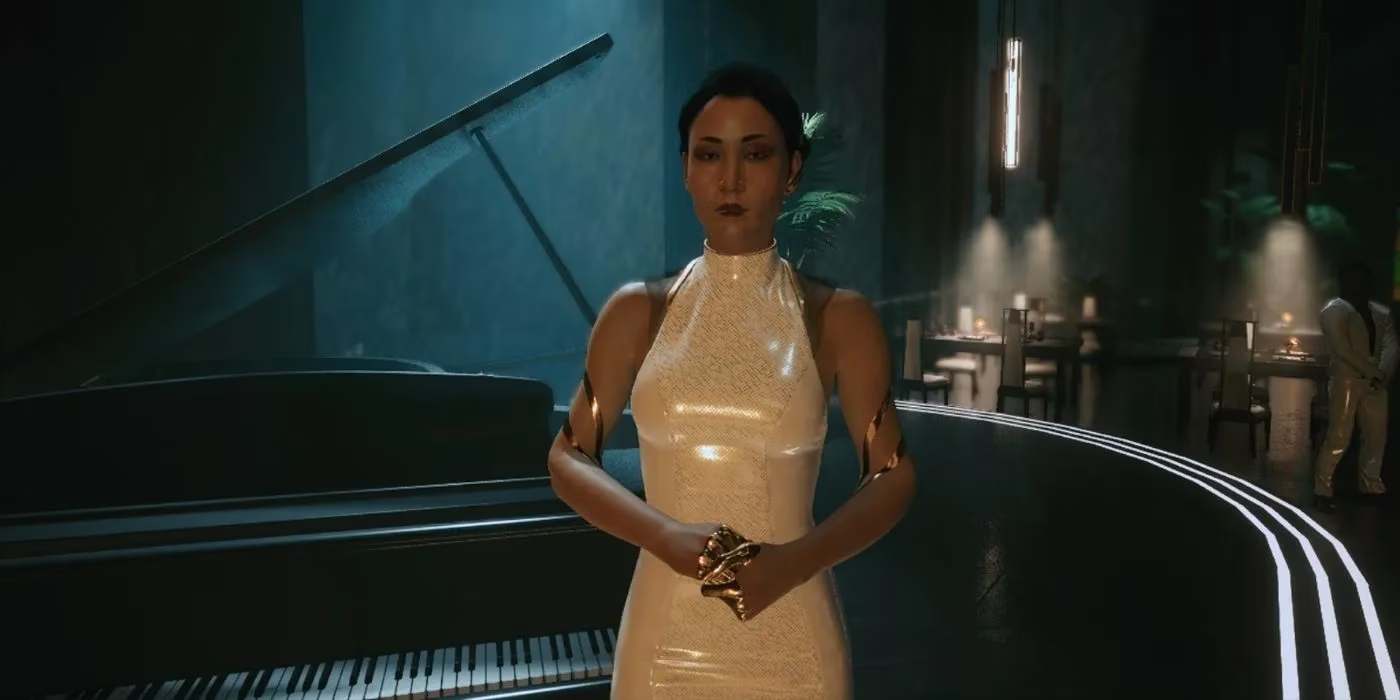
If you thought your family dinners were awkward, try negotiating for your life with the daughter of the man whose death sparked your personal apocalypse. Hanako Arasaka offers V a clear, corporate-backed path to survival: let Arasaka extract the Relic. It's a tantalizing offer, the only one that promises a (somewhat) clean biological solution. But come on, this is Arasaka. The same megacorp that is the root of practically every problem in V's life, and the personal nemesis of the rockerboy in your skull. Johnny's furious protests are practically deafening. Trusting Hanako means ignoring every instinct, every piece of evidence about her family's cruelty, and betting your life on the one Arasaka who seems reasonable. It's the ultimate test of desperation. Is survival worth becoming indebted to the very entity that symbolizes everything wrong with the world? This choice isn't about right or wrong; it's about how much of your soul you're willing to sell for a few more years of breath.
3. Oda's Fate: Honor or Hatred?
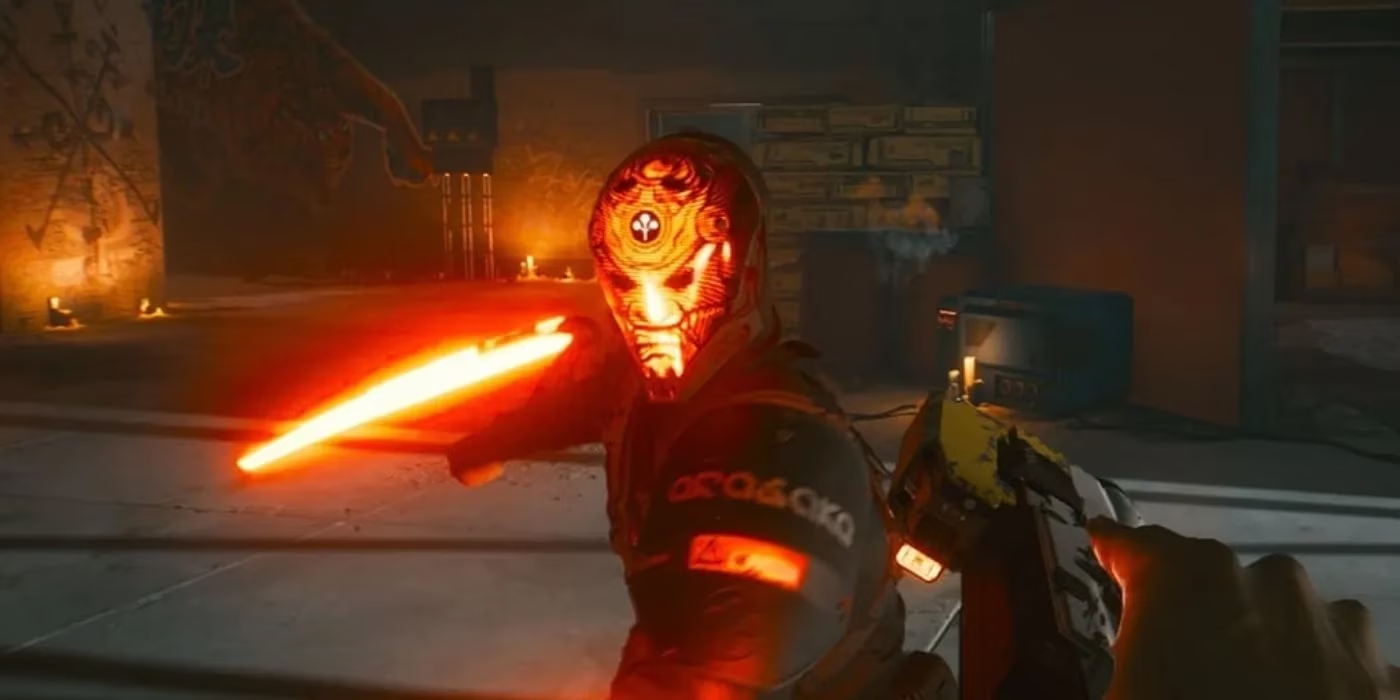
After one of the game's most intense boss battles—a blistering fight against Takemura's fiercely loyal bodyguard, Oda—the player is left standing over a defeated enemy. Takemura, voice strained with a mix of shame and loyalty, begs V to show mercy. Oda, for all his blind devotion and violent threats, was just doing his job. Sparing him feels like the high road, an act of respect for Takemura and for the code of the samurai Oda tries to embody. But man, oh man, is it tempting to put him down. This ninja has been nothing but a pain, a lethal obstacle wrapped in arrogance. Giving in to that anger, that desire for a permanent solution, is so very Night City. It's the choice between being the bigger person or succumbing to the city's default setting: ruthless efficiency. The game doesn't judge you overtly, but you'll feel it in Takemura's silent disappointment or your own lingering guilt.
2. All Guns Blazing: Fight or Pay in "The Pickup"

This early-game mission is where many players first realize Cyberpunk 2077 isn't messing around. In "The Pickup," V and Jackie waltz into a Maelstrom den to buy a bot. The straightforward choice: pay with the suspicious Militech credchip (which is guaranteed to cause a fight) or just... skip the negotiation and shoot everyone on sight from the get-go. On higher difficulties, this isn't a moral choice; it's a tactical suicide note. Royce and his chromed-up gang are a formidable challenge for a low-level V with pea-shooter weapons. Choosing violence is a thrilling, cinematic power fantasy that often ends with V and Jackie as two more stains on the All Foods factory floor. Choosing the "peaceful" route involves a tense, paranoid conversation where you know betrayal is inevitable. It's a brilliant introduction to the game's ethos: there are no easy outs, only varying degrees of trouble. You're not choosing between good and evil; you're choosing your preferred flavor of chaos.
1. The Ultimate Betrayal: Voodoo Boys or NetWatch?
In the labyrinthine quest "I Walk the Line," V is caught in a cold war between the secretive Voodoo Boys and the corporate net-cops of NetWatch. The Voodoo Boys, led by the intimidating Placide, treat V as a useful tool, a "guest" who is decidedly unwelcome. The NetWatch agent, isolated and desperate, offers a deal: betray the Boys, and he'll help you. Johnny screams not to trust any corpo. But here's the twist: the NetWatch agent is telling the truth. The Voodoo Boys are planning to kill V once their use is up. So, do you side with the untrustworthy corpo to survive, or stick with the untrustworthy gang that sees you as disposable? Choosing NetWatch feels slimy—you're aligning with the system—but it's the pragmatic, survivalist choice. Choosing the Voodoo Boys is a defiant, anti-establishment move that gets you a knife in the back. It's the perfect encapsulation of Cyberpunk's world: you're always choosing who gets to screw you over.
Navigating these dilemmas in 2026's definitive version of Cyberpunk 2077 is a uniquely masochistic pleasure. The game no longer fights you with technical glitches; now it challenges you purely with psychological warfare. Each choice is a razor's edge, and no matter how you slide down it, you're bound to get cut. These decisions linger, haunting players with phantom regrets and "what if" scenarios, proving that in Night City, the most dangerous weapon isn't a smart gun or a monowire—it's the burden of choice itself. So, buckle up, samurai. You've got a city to burn, and a conscience to shred along the way.