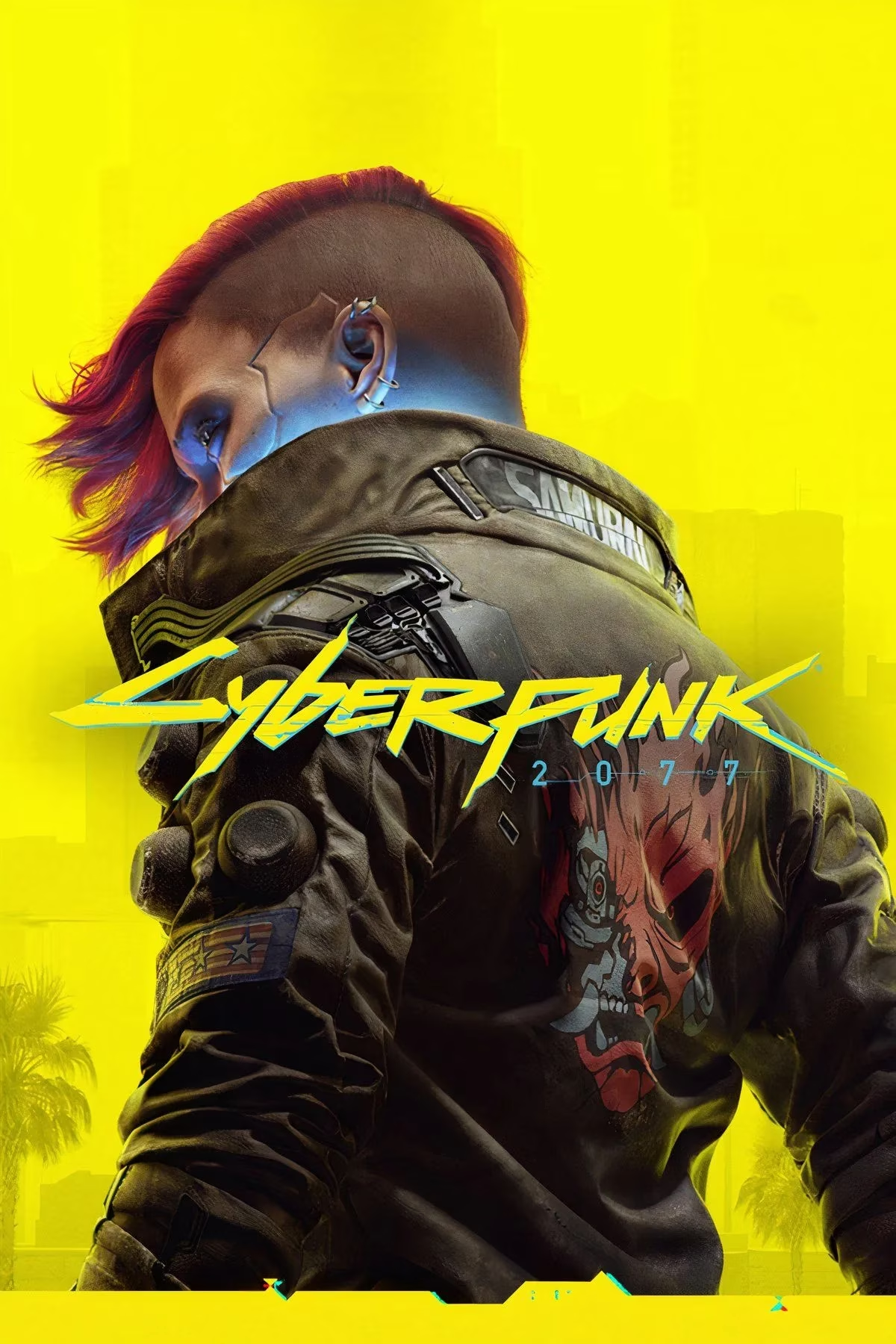
Let's be real, for a game that promised a neon-drenched playground of moral decay and high-tech low-lives, Cyberpunk 2077 can be surprisingly... well-behaved. Here's the scoop: despite all the chrome, the grit, and the ads screaming about forging your own path, Night City has this weirdly strict moral compass when it comes to its protagonist, V. It's like the city itself is that one friend who says "do whatever you want!" but then gives you the side-eye if you even think about jaywalking. For players who dreamed of being a ruthless cyberpunk kingpin, the reality often feels more like being a glorified, heavily-armed errand runner with a heart of gold.

The Illusion of Choice and the Hero's Straightjacket
CD Projekt Red's marketing folks did a bang-up job selling the dream: mold V into whoever you desire in Night City. Want to be a cold-blooded merc? A charming rogue? A saint in a dystopia? The choice was supposedly yours. But once you boot up the game, you quickly realize V comes with some serious pre-installed firmware. No matter how many cybernetic enhancements you bolt on, V's core personality—endlessly loyal, weirdly considerate, and fundamentally decent—is pretty much hardwired. You can't even properly join one of the city's infamous gangs; the game forces you to fight them all. Talk about commitment issues!
Here's the kicker: the most villainous acts available are, frankly, boring and pointless. You can:
-
Murder random civilians for zero gain (which just summons MaxTac to turn you into scrap metal).
-
Steal cars you can't even keep (what's the point?).
-
Occasionally choose a slightly mean dialogue option that often leads to a worse reward.
The so-called "Gigs," the criminal side jobs, almost always pit you against worse people, making you the hero by default. Sure, you might get to rough someone up, but you're usually doing it for a "good" reason or a bigger payday. It's like the game is constantly whispering, "C'mon, play nice." Night City, a place supposedly designed to amplify humanity's worst traits, somehow turns V into its most reliable freelance troubleshooter.
Why Games Are Scared of the Dark Side
Honestly, Cyberpunk 2077 isn't alone in this. Making a truly compelling evil path is video gaming's white whale. For every Mass Effect Renegade option that felt satisfyingly ruthless, there are a dozen games where being bad just feels... dumb or unrewarding. It's tough! As players, we form connections with characters, even digital ones. Purposefully choosing to be cruel can feel icky, like kicking a virtual puppy. The game has to work extra hard to make that darkness tempting.
The missing ingredient? Incentive. Games often forget to give players a proper reason to be villainous beyond just "for the lulz." Where's the unique gear, the powerful alliances, the twisted narrative branches that open up only to those willing to get their hands dirty? Cyberpunk 2077 could have learned from mechanics like the syndicate system in Star Wars Outlaws, where aligning with a faction grants tangible, gameplay-altering benefits. Instead, Night City offers moral ambiguity with training wheels.
A Blueprint for Cyberpunk 2: Start in the Gutter
So, where do we go from here? With the inevitable Cyberpunk 2 on the horizon (let's be optimistic for 2026!), there's a golden opportunity to fix this. The solution might be simpler than we think: start with an evil protagonist.
Imagine this: your character in Cyberpunk 2 isn't a blank slate or a secret sweetheart. They're a genuinely flawed, selfish, or even nasty piece of work from the moment you hit "New Game." The journey isn't about becoming a cyberpunk; it's about deciding what kind of cyberpunk you'll be. Will you lean into the cruelty and climb the ladder of Night City's underworld through betrayal and violence? Or will you, against all odds, find slivers of humanity and redemption in a city that grinds it to dust?
This approach does a few brilliant things:
-
It removes the guilt: You're not corrupting a good person; you're managing a bad one.
-
It creates real stakes: Choosing to do a good deed becomes a meaningful, difficult choice, not the default.
-
It fits the genre: Cyberpunk is about decay, transgression, and surviving in a broken system. A protagonist who starts broken embodies that.
CD Projekt Red tried to hint at this with the Life Paths in 2077, but they were more backstory flavor than core character direction. For the sequel, they should go all in. Let players forge alliances with gangs, betray fixers for better offers, and make decisions that truly lock out content based on their reputation as a brutal merc or a reluctant hero.
The Neon Future Awaits
Look, Cyberpunk 2077 is a fantastic game with a compelling story and V is a great character. But let's call a spade a spade—it's a linear narrative wearing an open-world mask. For a sequel to truly deliver on the cyberpunk fantasy of self-determination in a dystopia, it needs to embrace the moral murkiness it only dabbles in now. The city should feel dangerous not just because of the enemies on the street, but because of the choices it forces you to make and the person it encourages you to become.
The tech and visuals of Night City are already top-tier. Now, it's time for the soul of the city—and the soul of the player character—to catch up. After all, in a world where you can replace your arms with rocket launchers, shouldn't you also be able to replace your conscience?