As a dedicated player who has journeyed through Night City's highs and lows, I can't help but marvel at the continued dedication of CD Projekt Red. Even as we approach 2026, with the studio deep in development on titles like The Witcher 4, their commitment to Cyberpunk 2077 remains unwavering. The recent release of Patch 2.13 is a testament to this, transforming an already immersive RPG into a technical showcase for PC gaming. It begs the question: how many developers continue to push visual boundaries for a game years after its initial release? The answer seems to be CD Projekt Red, and they're doing it with cutting-edge technologies that make Night City more breathtaking than ever.
The Core of Patch 2.13: A Triple-Threat of Tech
At its heart, Patch 2.13 is all about empowering PC players with the latest upscaling and frame generation technologies. The studio has integrated three major systems, each designed to tackle a different aspect of performance and visual fidelity.
Let's break down the key additions:
-
AMD FidelityFX Super Resolution 3 (FSR 3) with Frame Generation: This is arguably the headline feature. For players with compatible AMD (and even some NVIDIA) graphics cards, this technology is a game-changer. It works by using advanced algorithms to simulate and insert additional frames between two traditionally rendered frames. The result? Significantly smoother gameplay, especially in demanding scenes. However, it's recommended to use this with a high-refresh-rate monitor (120Hz or above) to avoid potential frame syncing issues.
-
Intel Xe Super Sampling 1.3 (XeSS 1.3): CD Projekt Red hasn't forgotten Intel Arc GPU users. The integration of the latest XeSS version is a boon for performance, particularly when playing at 4K resolutions with advanced ray-tracing enabled. This ensures that even the most visually intensive settings remain playable.
-
Simultaneous DLAA & DLSS Ray Reconstruction: For the NVIDIA faithful, this patch unlocks a powerful combination. For the first time, players can activate DLAA (Deep Learning Anti-Aliasing) and DLSS Ray Reconstruction at the same time. DLAA provides supremely clean image quality by removing jaggies, while Ray Reconstruction uses AI to create more accurate and realistic lighting, shadows, and reflections. The synergy promises a sharper, more lifelike image.
What This Means for Your Night City Experience
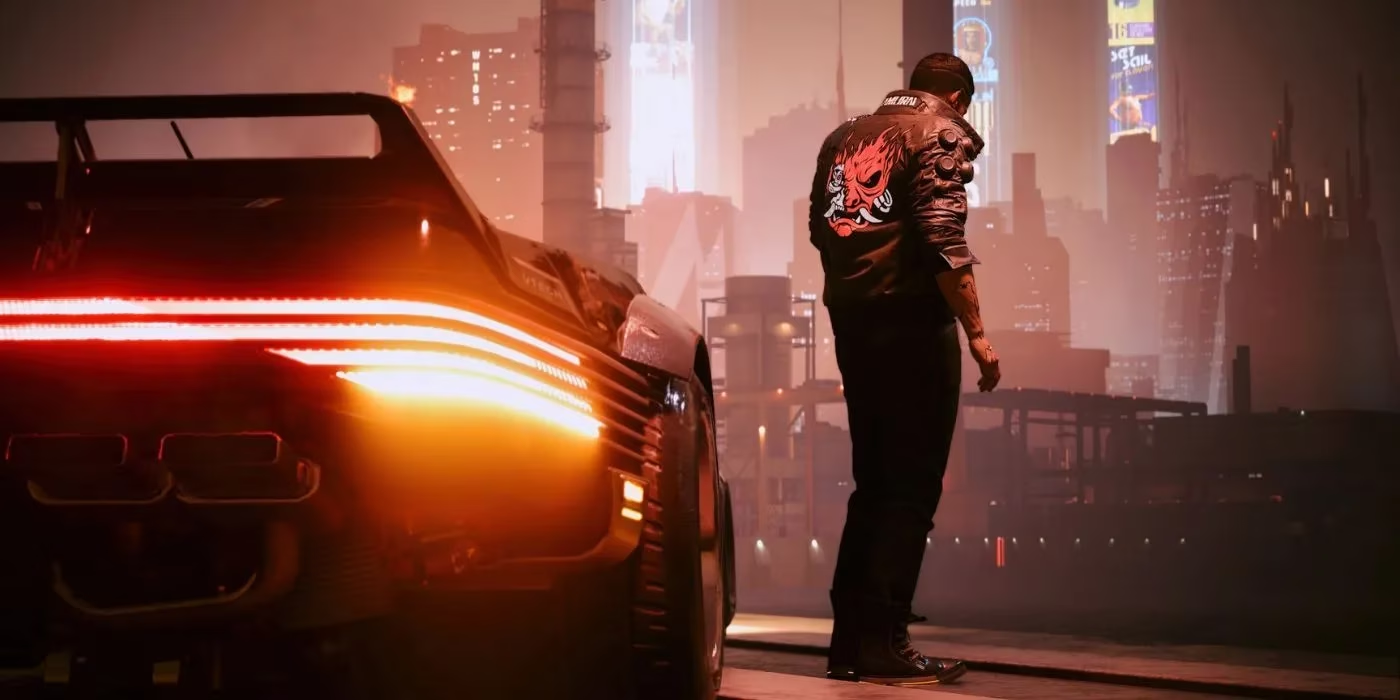
So, what do these technical terms translate to in practice? Imagine cruising through the rain-slicked streets of Japantown. With FSR 3 Frame Generation, the motion of your vehicle and the bustling crowds will be buttery smooth, eliminating stutters. Activating DLAA and Ray Reconstruction will make every neon sign reflection in a puddle look crisper and more physically accurate, while the complex shadows cast by towering megabuildings gain a new depth. Playing at 4K with XeSS 1.3 support means you can witness all this detail without sacrificing a stable frame rate during intense firefights in Dogtown.
Of course, with great power comes great responsibility—for your GPU. Enabling both DLAA and DLSS Ray Reconstruction simultaneously is demanding. It's a setting for those with high-end systems, and even then, you might trade some raw frames per second for unparalleled image clarity. But for those with the hardware, the payoff is a Night City that feels more tangible and visually cohesive than ever before.

A Legacy of Redemption and Looking Ahead
Reflecting on the journey from 2020 to now in 2026, the story of Cyberpunk 2077 is one of remarkable turnaround. This patch is not about fixing bugs; it's about elevating an already solid experience to new heights. It sends a clear message: Night City is a living platform that CD Projekt Red remains invested in.
While the studio's primary focus may be on the future—the next Witcher saga, the Cyberpunk sequel codenamed Orion—they understand the value of their existing worlds. Supporting Cyberpunk 2077 with meaningful, high-end updates maintains player engagement and goodwill, setting a strong foundation for whatever comes next in the franchise.
As a player, seeing this level of post-launch support years later is incredibly rewarding. It makes you wonder: how will these technological foundations influence the development of the next Cyberpunk game? If Patch 2.13 is any indication, the future of Night City is blindingly bright, rendered in stunning 4K with flawless frame generation and AI-enhanced lighting. The city may have a dark soul, but its visual presentation has never been more luminous.