As of 2026, CD Projekt Red's Cyberpunk 2077 remains a titan in the gaming landscape, its enduring popularity fueled by the dense, living, breathing metropolis of Night City. Players navigating this urban jungle to save protagonist V from a grim fate encounter a world steeped in references to the genre's foundational works. Among these, the homage paid to the seminal 1989 manga Ghost in the Shell, created by Masamune Shirow, is particularly profound and woven into the game's very fabric. Why would a game set in its own rich universe dedicate so many details to another franchise? The answer lies in a shared philosophical and aesthetic DNA, where themes of cybernetics, identity, corporate dystopia, and the human-technology fusion are not just background noise but the core of the narrative experience.
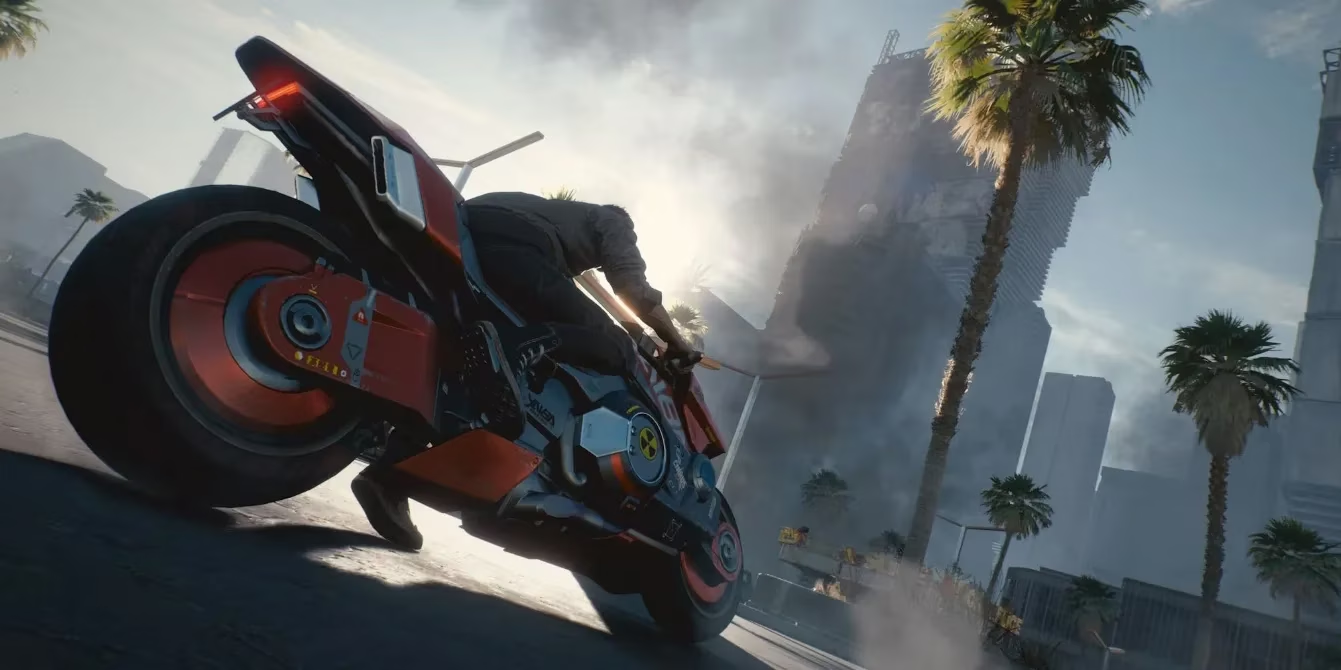
The references range from the overt to the brilliantly subtle. One of the most direct nods is the Yaiba Kusanagi CT-3X motorcycle, a vehicle available to players. Its name is a direct lift from Ghost in the Shell's iconic protagonist, Major Motoko Kusanagi. Interestingly, this bike serves a dual homage: while its name honors Shirow's creation, its sleek, red design is famously inspired by Kaneda's bike from Akira, another cornerstone of cyberpunk media. This single object acts as a convergence point for two legendary influences on the genre.
But the tributes extend far beyond vehicle names. Keen-eyed players might notice the profile picture used by the beloved character Judy Alvarez. It depicts a literal ghost emerging from a shell, a visual pun that is both a clever Easter egg and a testament to the developers' reverence. This subtle detail, easily missed in the hustle of Night City, perfectly encapsulates the game's layered approach to paying respect.
Perhaps the most integrated reference exists within one of the game's core side activities: the Cyberpsycho Sightings. These missions task V with hunting down individuals who have lost their sanity due to excessive cybernetic augmentation. The entire concept feels ripped from the streets of Ghost in the Shell's New Port City, where the line between human and machine is constantly blurred and often violently crossed. One specific encounter, against Lt. Mower, heightens this connection. This cyberpsycho's appearance is strikingly similar to the Major, and the industrial, watery arena where the battle takes place strongly echoes the aesthetic and setting of famous scenes from the 1995 anime film. Isn't it fascinating how a side mission can feel like a direct narrative transplant from another universe?
The connection is deeper than mere visual or namedropping Easter eggs. The worlds themselves share a foundational blueprint. Consider the core thematic pillars:
-
Corporate Dystopia: Both Ghost in the Shell and Cyberpunk 2077 present futures where mega-corporations wield power rivaling or surpassing that of governments. The threat of unchecked corporate control is a primary driver of societal decay in both worlds.
-
Identity and Consciousness: What does it mean to be human when your body is mostly synthetic? When your memories can be digitized and hacked? This philosophical quandary is central to the Major's journey in Ghost in the Shell and is reflected in V's struggle with the Relic and Johnny Silverhand's engram.
-
The Cyborg Evolution: Both properties explore the endpoint of human-technology integration. They show societies where becoming a cyborg is normalized, yet this very process creates new forms of alienation, crime, and psychological breakdown—exemplified by the cyberpsychos.
It's accurate to view Ghost in the Shell's New Port City as a spiritual predecessor to Night City. The genre's evolution is a chain of inspiration:
-
1980s Foundations: Films like Blade Runner and Akira established the core visual and thematic language of cyberpunk.
-
Genre Deepening: Ghost in the Shell arrived and expanded on these ideas, adding dense philosophical inquiry about consciousness and identity within a high-tech, low-life society.
-
Modern Realization: Cyberpunk 2077 absorbed elements from all these predecessors, synthesizing them into an interactive, sprawling experience. Night City is, in many ways, the fully realized, walkable version of the dystopias those earlier works could only show in snippets.
The table below summarizes key points of homage and shared themes:
| Aspect | Ghost in the Shell Reference in Cyberpunk 2077 | Shared Theme |
|---|---|---|
| Character/Vehicle | Yaiba Kusanagi CT-3X Motorcycle | Technology as an extension of identity |
| Visual Easter Egg | Judy Alvarez's "ghost in a shell" icon | The duality of body (shell) and soul/mind (ghost) |
| Mission Design | Cyberpsycho Sightings, especially Lt. Mower fight | The psychological cost of cybernetic enhancement |
| World-Building | Night City's corporate dominance & urban decay | High-tech, low-life dystopia governed by corporations |
| Core Philosophy | V's struggle with the Relic & Johnny's engram | The nature of consciousness, memory, and personal identity in a digital age |
Ultimately, the multitude of Ghost in the Shell references in Cyberpunk 2077 is not simple fan service. It is a recognition of lineage. CD Projekt Red didn't just include a cool bike or a funny picture; they integrated the very soul of Shirow's work into their own. They understood that to build an authentic cyberpunk world, they needed to acknowledge and build upon the stories that asked the hard questions first. In 2026, as both franchises continue to be discussed and analyzed, their interplay stands as a masterclass in how new works can honor their inspirations while forging a distinct and powerful identity of their own. The ghost of the Major doesn't just haunt a shell in Night City; it helps give the entire city its poignant, complex, and unforgettable spirit.