In the years following its tumultuous 2024 launch, Cyberpunk 2077 has undergone a remarkable transformation, evolving from a game plagued by technical issues into a polished and content-rich experience that has largely redeemed its reputation. This journey of improvement, often compared to the redemption arc of games like No Man's Sky, has set a high benchmark for its highly anticipated sequel, currently in development under the codename Project Orion. As the gaming community looks ahead to 2026 and beyond, one of the most discussed post-launch features—the in-game apartment system—offers a clear roadmap for the future of player housing in the Cyberpunk universe.
The addition of purchasable apartments via the game's 1.5 update was widely celebrated as a major enhancement to the RPG's immersive qualities. This feature introduced a semblance of a real-estate market within Night City, allowing players to own property in distinct districts, a system many believed was originally intended for the game's initial release. Players can now acquire homes in several key areas, each with its own unique character and appeal.
-
Watson: Offering a gritty, lived-in atmosphere.
-
Westbrook: Presenting a more bohemian and artistic vibe.
-
Heywood: Reflecting a distinct cultural flavor.
-
City Center: Providing a sleek, corporate, and luxurious living space.
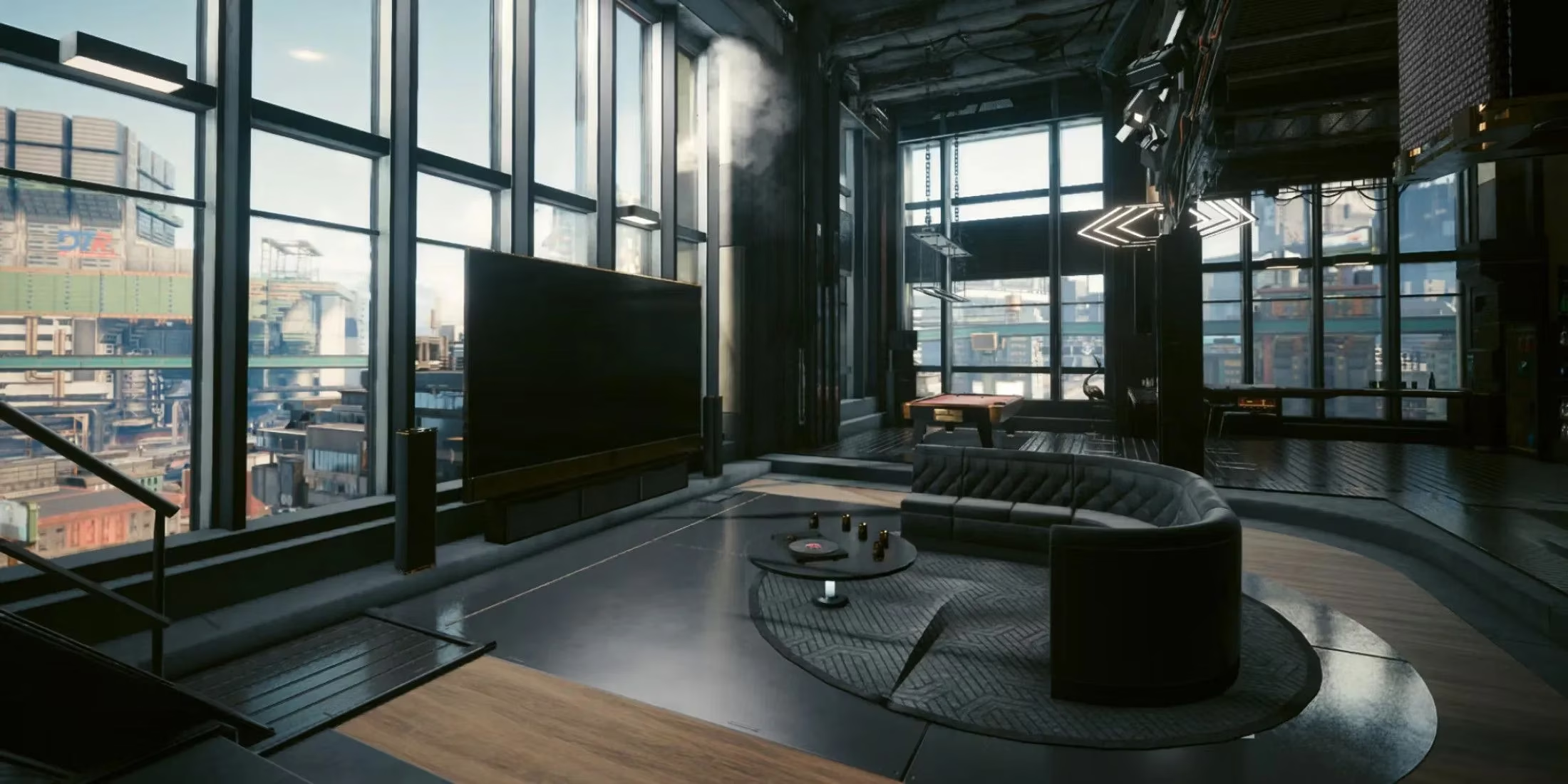
These homesteads serve a dual purpose: they enrich role-playing opportunities and provide tangible gameplay benefits. A player embodying a corporate-aligned V might naturally gravitate towards the opulent City Center apartment, while a street-smart nomad might feel more at home in Westbrook. Beyond aesthetics, these apartments function as safe havens, offering players buffs and health recovery, integrating the housing system meaningfully into the core gameplay loop.
However, the current system reveals its limitations, particularly in the realm of personalization. While V's original starter apartment offers some minor customization, the four units added in the 1.5 patch are essentially static purchases. The customization that does exist is superficial, limited to selecting from a few preset color schemes and texture swaps. Players have no agency over furniture arrangement, room layout, or decorative details, which feels at odds with the deeply personal nature of creating a home in a role-playing game.
This presents a pivotal design decision for the developers at CD Projekt Red as they craft Project Orion. The sequel stands at a crossroads regarding its approach to player housing. One path involves expanding the system seen in Cyberpunk 2077, offering a broader catalog of pre-designed, themed apartments across an even larger Night City, similar to the vast property portfolios available in titles like GTA Online. This approach prioritizes variety and location-based role-playing.
The alternative, and arguably more compelling, path is to prioritize depth over breadth. Project Orion could choose to offer a more curated selection of homes—perhaps even starting the player with a single, customizable unit—and invest heavily in robust customization tools. This direction would transform the apartment from a mere asset into a canvas for player creativity, fostering a engaging meta-game centered on interior design and personal expression.
Imagine a system in Project Orion where players can:
| Customization Aspect | Potential Depth in Project Orion |
|---|---|
| Furniture | Acquire, craft, or purchase individual pieces and place them freely. |
| Layout | Modify room partitions, window placements, and even structural elements. |
| Amenities | Upgrade the unit to include functional additions like weapon displays, crafting benches, or entertainment systems. |
| Aesthetics | Apply dynamic lighting, wall coverings, and decorative items with fine-grained control. |
Such a system wouldn't need to reach the intricate simulation level of The Sims, but moving beyond static palettes to allow players to truly shape their space would create a powerful sense of ownership and attachment. A deeply customizable home becomes a personal landmark in the vast, impersonal sprawl of Night City, a refuge that reflects the player's journey, style, and choices.
As of 2026, the lessons from Cyberpunk 2077's post-launch evolution are clear. The sequel has the opportunity to not just avoid the pitfalls of the past but to radically advance the features that players have come to love. By taking the promising foundation of the apartment system and building upon it with meaningful, player-driven customization, Project Orion can deliver a housing experience that is not just an improved feature, but a transformative element of immersion and role-playing in the next generation of Cyberpunk storytelling.