The digital heart of Night City still beats with the repercussions of choices made years ago. In the explosive Phantom Liberty expansion for Cyberpunk 2077, players were thrust into the treacherous political battleground of Dogtown and faced with a defining moral crossroads: to side with the loyalist Federal Intelligence Agency sleeper agent, Solomon Reed, or to aid the desperate rogue netrunner, Song So Mi (Songbird), in her bid for freedom from the clutches of the New United States of America. A recent community poll has reignited discussions about the enduring narrative weight of this decision, highlighting the complex, often agonizing calculus players apply in the dark future's morally gray landscape.
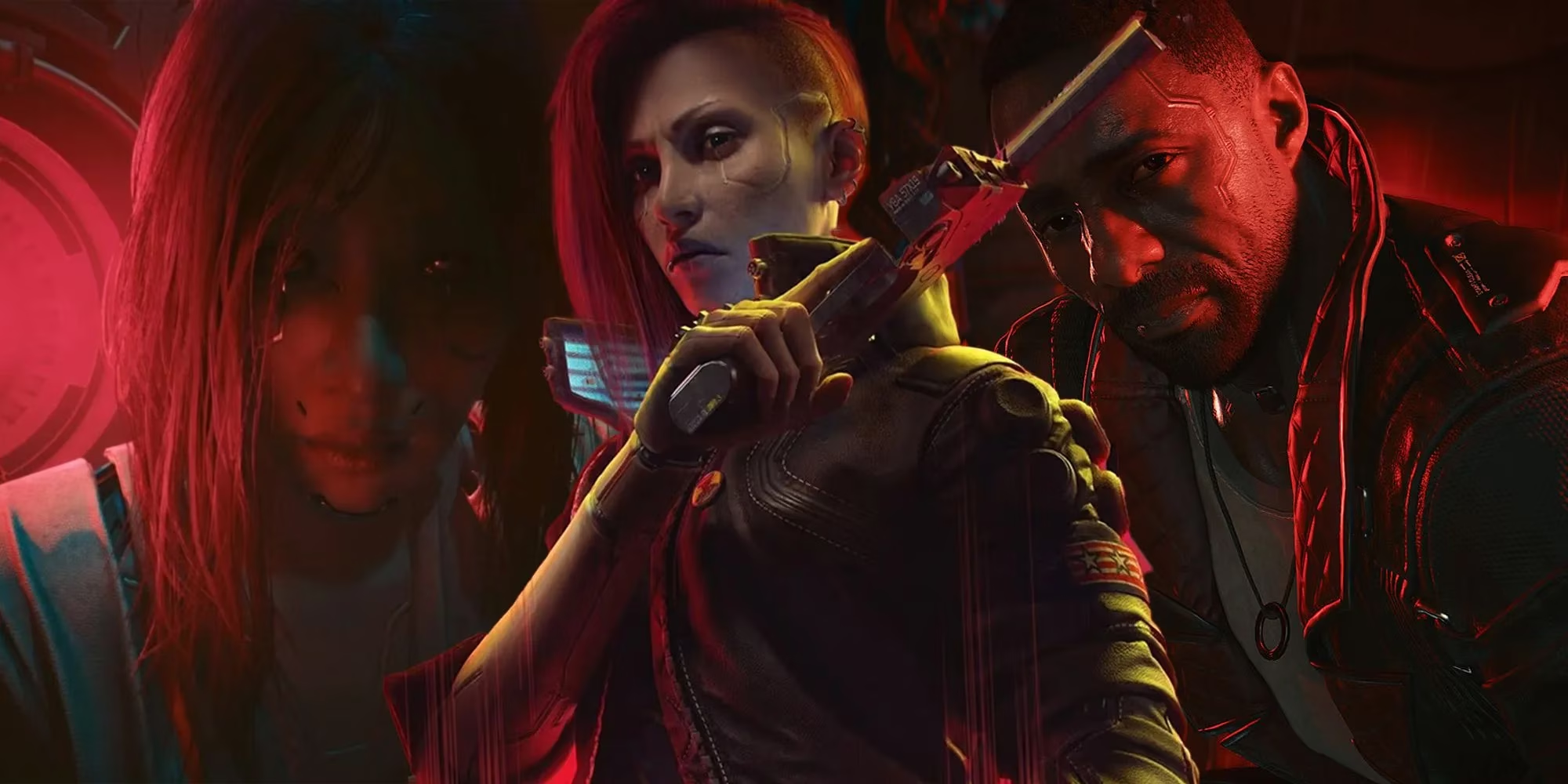
The Player's Verdict: A Leaning Towards Liberation
A revealing poll conducted within the Cyberpunk 2077 community shed light on the prevailing sentiment among players who have navigated the expansion's treacherous narrative. The data presented a clear, though not unanimous, inclination towards compassion for the exploited netrunner.
Poll Results Breakdown:
| Choice | Number of Votes | Percentage (Approx.) | Key Player Rationale |
|---|---|---|---|
| Betray Reed, Free Songbird 🔓 | 108 | ~64% | Desire to grant Songbird freedom, distrust of Reed's methods. |
| Betray Songbird (Kill) 💀 | 19 | ~11% | View Songbird as manipulative, a threat that must be eliminated. |
| Betray Songbird (Capture) 🚔 | 21 | ~12% | Belief in duty or Reed's cause, but unwilling to kill. |
| Betray Both ⚔️ | 15 | ~9% | Loss of trust in both characters; a rejection of their agendas. |
| Ignore the Expansion 😶 | 6 | ~4% | Radical choice to let President Myers die, leaving Dogtown to chaos. |
This distribution underscores a significant narrative success for CD Projekt Red. The majority's choice to free Songbird wasn't made lightly. In community discussions, players elaborated that Reed's cold, mission-first methodology—epitomized by lethal actions taken to infiltrate a base—eroded their trust. Conversely, while acknowledging Songbird's manipulations, many concluded that her desire for emancipation from being a tool for President Myers' Blackwall exploits represented a fundamentally just cause. Her plea for freedom resonated more powerfully than Reed's appeal to duty and order.
The Crossroads of 'Firestarter': A Web of Motives
The pivotal moment arrives during the mission Firestarter, where players must cement their allegiance. The expansion masterfully constructs compelling, yet flawed, justifications for each path:
-
The Case for Solomon Reed: He represents stability, honor, and a potential cure. Aligning with the F.I.A. agent offers V a tangible, if ethically costly, path to survival through a new ending in the main campaign. Reed's history with Songbird is framed by paternal regret and a sense of responsibility, making betrayal feel like a profound personal failure.
-
The Case for Song So Mi: She embodies the ultimate cyberpunk trope: the individual fighting against an omnipotent, corrupt system. Choosing her is a choice for radical empathy, rebellion, and the chance to spare another soul from being ground up by the machinations of power. It is, as many players argued, the choice that feels right, even if the practical outcome for V is more uncertain.
CD Projekt Red ensured neither path offered a pristine resolution. Players who initially sided with Reed were later confronted with haunting flashbacks revealing the full tragedy of Songbird's past, a narrative technique that forced introspection and, potentially, a change of heart. This layered storytelling ensured the decision was never static but a living part of the gameplay experience.
The Enduring Weight of Choice
Years after its release, the legacy of Phantom Liberty is cemented not by explosive set pieces alone, but by the lingering psychological impact of its central dilemma. The expansion refused to provide a definitively "good" ending, instead offering variations on sacrifice and consequence.
-
Choosing Songbird's Freedom: This path culminates in a poignant, bittersweet moment. Players who free her must then confront Reed, a confrontation charged with tragedy as he is forced to choose between his protégé and his orders. Eliminating him to secure Songbird's passage to the Moon's orbital clinic is a somber act that leaves V with little but the hope that her freedom was worth the cost.
-
Choosing Reed's Duty: Delivering Songbird back to the NUSA ensures her survival but condemns her to a life of continued servitude. While this may unlock a crucial opportunity for V's own survival, it comes at the cost of becoming complicit in her perpetual imprisonment, a hollow victory that aligns with the often-bleak themes of the Cyberpunk universe.
The fact that a significant minority of players chose paths of rejection—betraying both or ignoring the narrative entirely—speaks to the depth of the scenario. These choices are valid commentaries on the narrative itself, rejecting the flawed binaries presented by Dogtown's power players.
Ultimately, the discourse surrounding Reed versus Songbird stands as a testament to sophisticated narrative design. It presents a dilemma where logic, emotion, morality, and self-interest clash irreconcilably. The majority's lean towards freeing Songbird suggests that in the grim darkness of Night City's future, the drive for individual autonomy and mercy remains a powerful, if risky, beacon. The choice continues to define players' experiences, proving that in Cyberpunk 2077, the most dangerous malware is regret, and it's a program that runs long after the console is turned off.