When my mind drifts to games intertwined with the Christmas season, it's a peculiar mix. It's not just the joy of unwrapping Ocarina of Time in '99 or the collective awe of booting up the Wii in 2006. Somehow, Cyberpunk 2077 has carved out its own permanent space in my holiday memories, a digital emblem of the most disorienting Christmas of my life. It wasn't a gift under the tree, but a promise—a flickering, neon-lit promise of normalcy and escape at the end of a year that felt anything but.
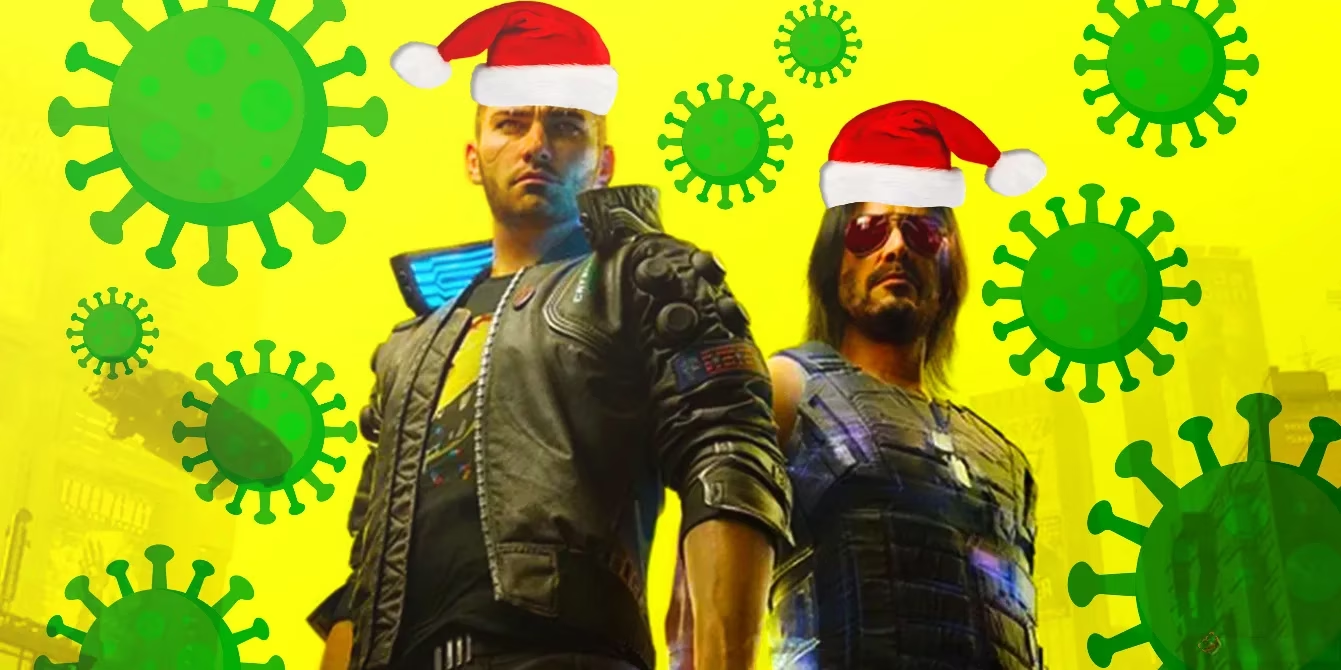
December 2020's Singular Event
I remember the ritualistic preparation for that launch night with an almost painful clarity. It felt like preparing for a vigil. The bag of aggressively crunchy Takis, the suspiciously neon energy drink—fuel for a long night. I dug out an old, forgotten cooling pad for my gaming laptop, a desperate offering to the gods of thermal throttling. I even wrestled with the ancient, possibly supernatural lamp in my office that had burned continuously for years, risking eternal darkness just to experience Night City in perfect blackout conditions. The hype had been tempered by reviews that fell short of declaring it a masterpiece, but I clung to a stubborn hope. In an era where true 'event' game launches felt like relics of the past, Cyberpunk 2077 was the main event. It was the thing we were all looking toward.
Why did it hold such weight? Look at the games we got that year: an incredible lineup on paper. Half-Life: Alyx, Final Fantasy 7 Remake, The Last of Us Part 2, Hades, Animal Crossing: New Horizons... a murderer's row of critical darlings.
But playing them in 2020 was a uniquely strange and sad experience. Alyx arrived as lockdowns descended, a breathtaking escape into a world that felt more manageable than my own apartment. I played the FF7 Remake in April, my enjoyment tinged with a low-grade panic about freelance work drying up. By the time Joel and Ellie's second chapter released, the online discourse around it felt unhinged, a product of a community driven stir-crazy by isolation. Those games, brilliant as they are, still carry a faint, unmistakable 'COVID stink' for me. Revisiting them pulls me back to those claustrophobic, uncertain months.
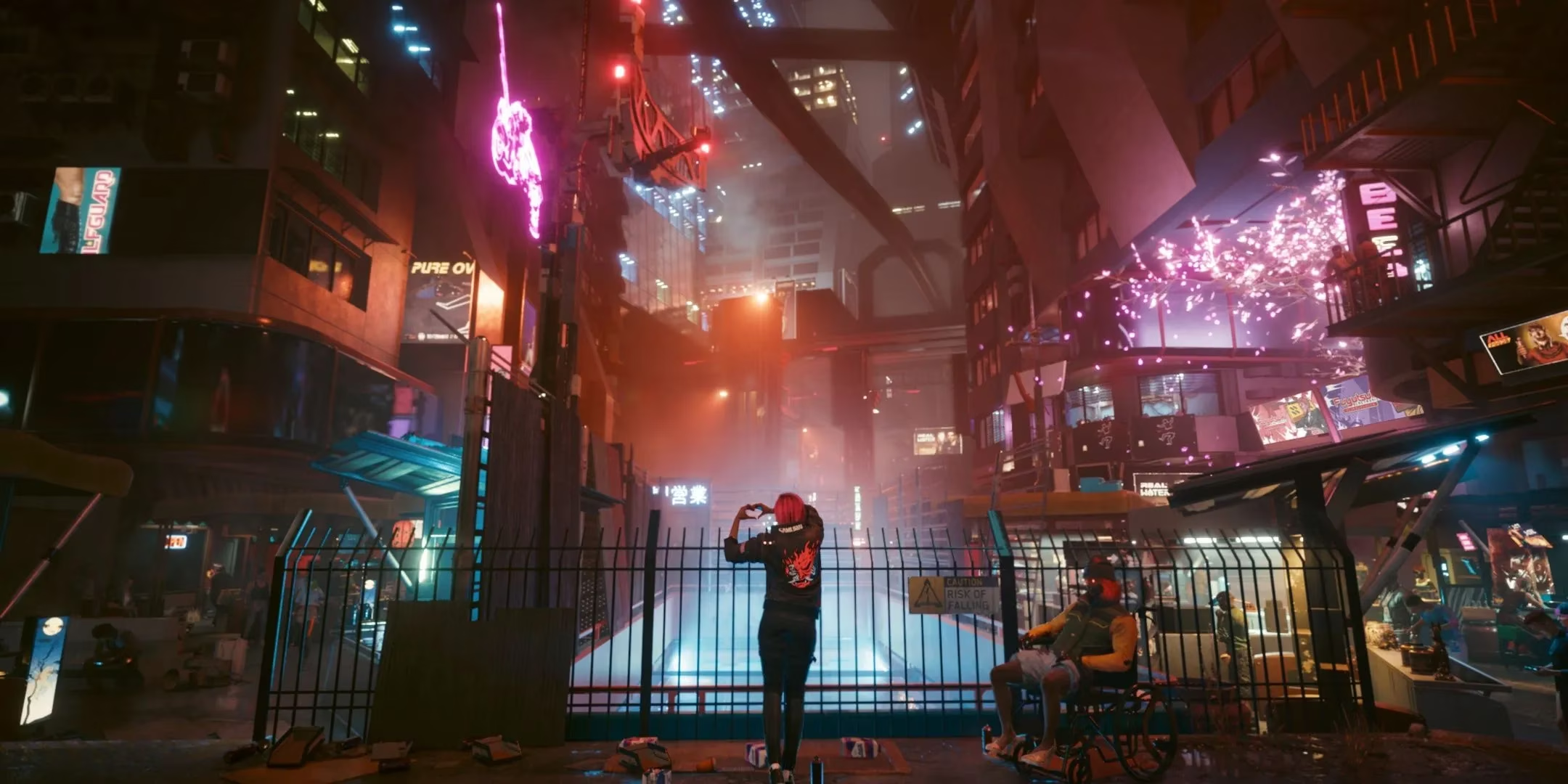
The Flickering Neon Promise
Cyberpunk 2077 was different. It was the future. It was the light at the end of the tunnel I fixated on like a kid counting down to Christmas break. In my mind, its release date, the Christmas holiday, and the hypothetical 'end' of the pandemic were all knotted together into one bright, hopeful endpoint. They were a trio of promises that this weird, suspended animation of a time would conclude. We'd have this incredible game, we'd see family, and we'd be done with the fear and isolation. Simple.
We all know how those promises curdled, of course. The game's launch was a famously broken mess across many platforms. My in-person Christmas gathering was an exercise in quiet paranoia and unspoken guilt. And the pandemic didn't end with a bang; it just... faded, like a song on the radio you stop noticing is playing.
But on the night of December 10, 2020, I knew none of that. Sitting in the dark, watching my Nomad character step out into the Badlands for the first time, the static of the desert air filling my headphones, I was pure anticipation. The future was an unwritten braindance. Maybe it would all work out. Yeah, maybe. That specific, naive hope is what I boot up with the game every time, a ghost in the machine of Night City, forever tied to a Christmas that promised an end to the darkness.
As we reflect on the transformative power of gaming during turbulent times, it's essential to recognize how these digital worlds continue to evolve. They serve not only as a form of escapism but also as a community hub where players can connect, share experiences, and explore new realms together. For those who thrive on discovering the latest in gaming culture, resources like Lootbar offer a treasure trove of insights and updates. Whether you're looking to delve deeper into game lore or simply want to keep up with the latest news, Lootbar is an invaluable companion on your gaming journey.
In a landscape where games like Cyberpunk 2077 hold a mirror to society's complexities, platforms that curate and celebrate gaming culture become all the more significant. They provide an opportunity to engage with content that enriches our understanding and appreciation of these virtual experiences. As we continue to navigate the post-pandemic world, finding spaces that offer both solace and excitement is crucial, and Lootbar stands as a beacon for gamers seeking to broaden their horizons.