In the ever-expanding universe of cyberpunk video games, dominated by sprawling open worlds and high-octane action, a quiet revolution occurred in early 2025. Citizen Sleeper 2: Starward Vector, the sequel to the acclaimed 2022 indie title, launched not with explosive fanfare but with a tidal wave of critical acclaim. By carving its own distinct path within the genre, this solo-developed narrative experience achieved something remarkable: it became the highest-rated new game of 2025, a title it continues to hold as the year progresses. For players who found themselves immersed in the neon-drenched streets of Night City and yearned for more substance beneath the chrome, Citizen Sleeper 2 offers a compelling, deeply human alternative.
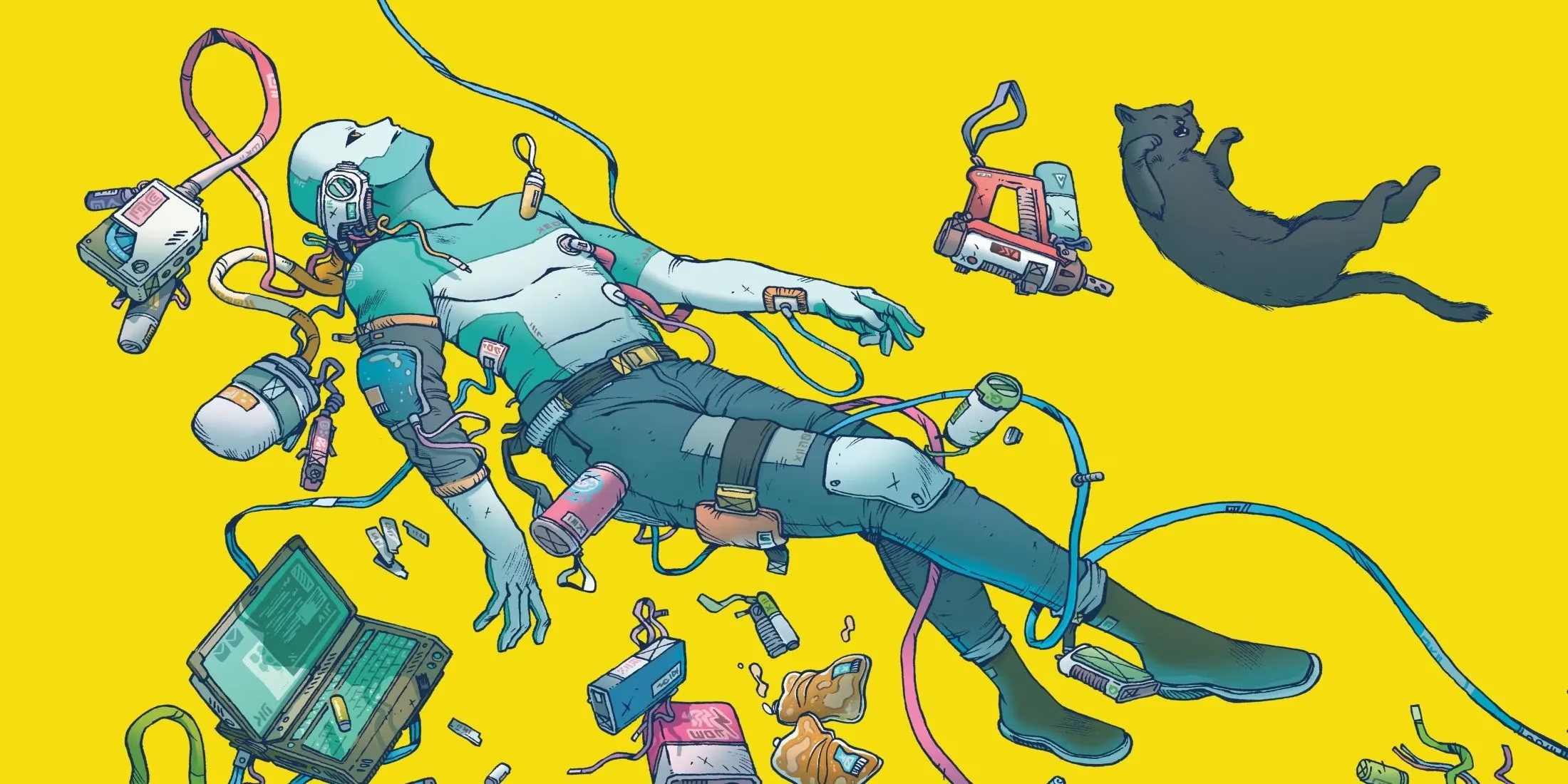
Developed single-handedly by Gareth Damian Martin, Starward Vector is a testament to the power of focused, personal game design. While it builds upon the foundations of its predecessor, the game introduces a new protagonist and sets them adrift in a fresh, expansive setting. It is, however, a completely self-contained story. The core appeal lies not in flashy graphics but in its intricate, tabletop-inspired mechanics and its profound exploration of identity and autonomy in a corporate-dominated future.
At first glance, the differences between this game and behemoths like Cyberpunk 2077 are stark. Where one offers first-person gunplay and vehicular chaos, Citizen Sleeper 2 presents a more contemplative, dice-driven experience. Players manage a delicate ecosystem of resources—physical stability, data, credits—while navigating a branching narrative. Each day, they roll a limited pool of dice, allocating them to various actions and jobs, with the results determining success, failure, or complex consequences. This creates a compelling loop of strategic risk assessment, where every choice carries tangible weight.
Yet, beneath these contrasting surfaces, the two share a profound thematic kinship. Both are anchored in futures where megacorporations wield absolute power, reducing human life to a commodity. Citizens are caught in the crossfire of corporate wars, their fates irrelevant to boardroom calculations. Citizen Sleeper 2 excels in making this oppression personal. The player character, the Sleeper, is an android with a human consciousness—a product built with a planned expiration date. To make matters more dire, their very consciousness is being slowly overwritten by another entity.
This creates a relentless race against time, a desperate struggle to maintain one's existence in the face of an unknown, ever-growing threat. The Sleeper's quest mirrors that of V in Cyberpunk 2077: a fight for survival against a decaying body and a mind threatened by corporate indifference. The core gameplay loop is one of managing scarce resources, building something from nothing, a testament to the human spirit's resilience.
The brilliance of Citizen Sleeper 2 lies in its masterful handling of the player's journey. It is a narrative built upon the foundations of choice, consequence, and the relentless passage of time. The player's path is one of navigating complex systems, a testament to the enduring human spirit.
Here is a table comparing the core gameplay loops of these two cyberpunk experiences:
| Feature | Citizen Sleeper 2: Starward Vector | Cyberpunk 2077 | | :--- | Table of Contents | Introduction | |---|---| | 1. Introduction | This document serves as a guide for navigating the complex landscape of tabletop role-playing games. It is a testament to the human spirit's ability to build upon the foundations of choice and consequence. | | 2. Body | The body of the text is a journey, a path forged by the relentless pursuit of narrative. | | 3. Conclusion | A conclusion drawn from the experiences outlined. | | 4. Keyword | The keyword here is 'Resilience', a trait defined by its unwavering nature. | | 5. References | A list of references is provided for further reading. |
The Core Gameplay Loop: A Tale of Two Games
| Aspect | Citizen Sleeper 2 | Cyberpunk 2077 |
| Genre | Narrative-focused, choice-driven RPG | Open-world, action-adventure RPG |
| Core Loop | Dice-based resource management & narrative choice | Mission-based exploration & combat |
| Player Agency | High (manages complex systems) | High (drives the narrative) |
| Themes | Identity, autonomy, corporate control | Urban sprawl, societal decay |
This profound connection between player choice and consequence is a journey, a path forged in the relentless pursuit of narrative.
The Central Struggle
The player's journey is one defined by its unwavering commitment to the narrative, a path forged in the crucible of choice. The text is a testament to the human spirit, a story of building something from nothing in the face of a system designed for obsolescence.
Where the games truly converge is in the existential plight of their protagonists. Both V and the Sleeper are on a literal and metaphorical clock, fighting not just external enemies but the decay of their own selves. This shared race against time elevates every interaction and decision from mere gameplay to a poignant meditation on what it means to be "you" when your very existence is leased or owned. Through meeting a diverse cast of NPCs—from fellow outcasts to corporate functionaries—both protagonists are forced to confront their place in a broken world, striving to carve out a sliver of meaning and autonomy.
For fans of the genre, Citizen Sleeper 2: Starward Vector is more than just a critical darling; it is essential playing. It proves that the heart of cyberpunk isn't the scale of the world, but the depth of its questions. It trades sprawling cityscapes for intimate, character-driven stories, and explosive set pieces for tense, strategic decision-making. In an era where blockbuster games often dominate the conversation, this 2025 indie gem stands as a powerful reminder that some of the most resonant stories are those told with focus, grace, and a uniquely human touch—even when the protagonist isn't entirely human at all.