I remember the first time I truly lost myself in Night City. It wasn't just the neon-drenched skyline or the chrome-plated mercenaries; it was the quiet moments between the chaos, the side content that breathed life into the concrete and steel. Cyberpunk 2077, that old friend, eventually found its soul after a rocky start, especially with the 2.0 patch and Phantom Liberty expansion whispering fixes into its digital ear. But even as I wander its streets now in 2026, I can't help but feel a familiar pang—a ghost of an opportunity missed, a space left empty where a vibrant piece of world-building could have lived. We had the side quests, oh, we had stories that could make a grown man weep into his synth-beer, but we never got our game. We never got the thing that made The Witcher 3's world hum with life long after the credits rolled. We never got our Gwent.
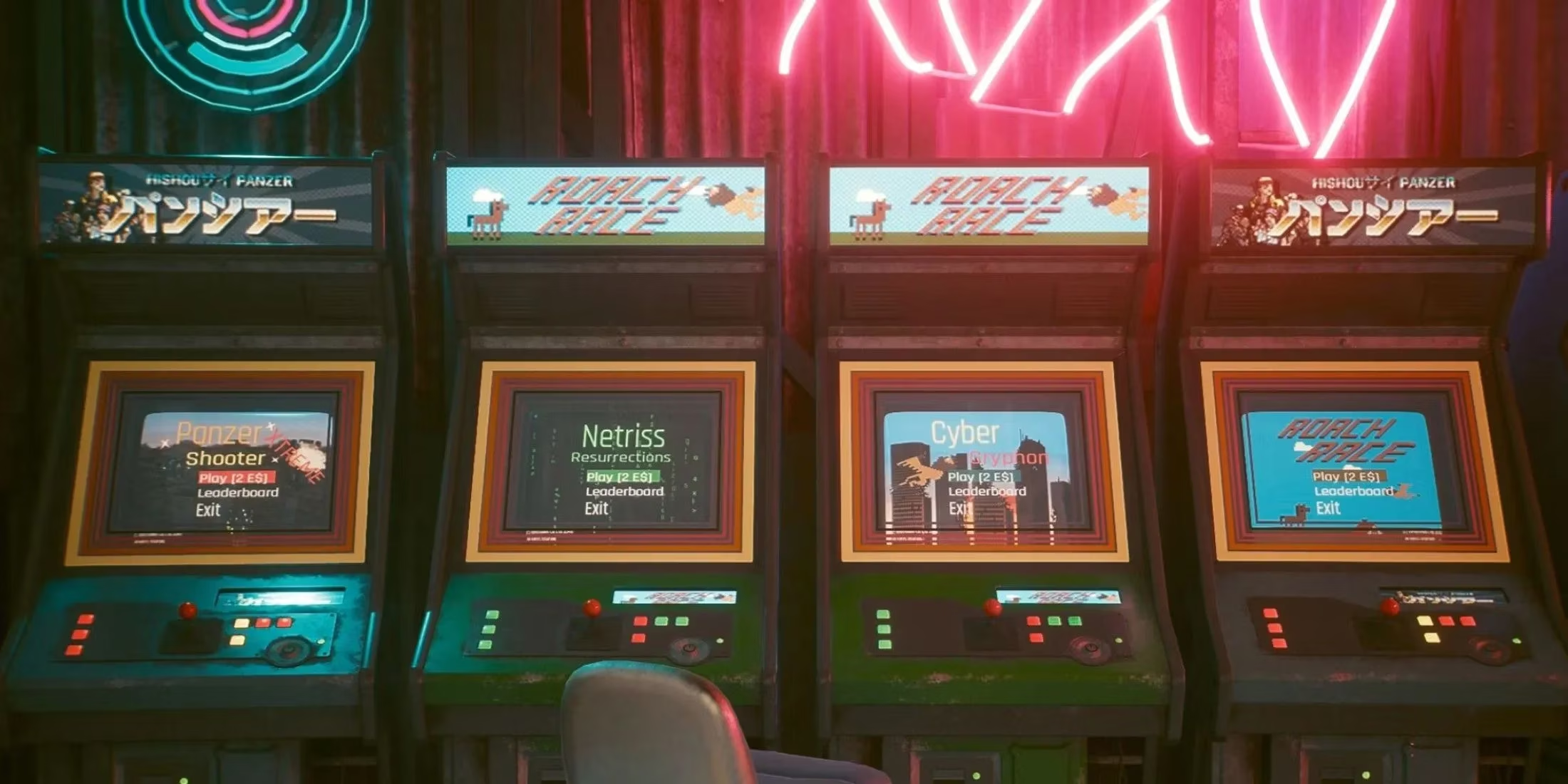
Let me tell you about Gwent. Man, that game... it wasn't just cards on a board. It was a slow, strategic heartbeat in the middle of a monster-slaying epic. Its popularity wasn't some fluke; it was mechanics and soul woven together. It let you live in that world, to sit down at a tavern table and engage in a pastime that felt as real as the griffin on the hill. Five years since Geralt hung up his swords, and Gwent's still kicking, even got its own life outside the game. That's the power of a mini-game done right. It builds the world from the inside out, in a way only a video game can. And in Cyberpunk 2077? Crickets. We got a couple of cute arcade cabinets—a nice wink and a nod—but nothing that ever made me feel like I was participating in Night City's culture. Talk about a missed shot.
So here we are, looking ahead to Project Orion. The slate is clean, the chrome is fresh. This is the chance to fix that. To give us our thing. The beauty is, Night City itself gives us the blueprint. We don't need a card game (though, hey, I wouldn't say no to a dark-future Tarot battle). This is the future, baby! We can think bigger, weirder, more immersive.
Project Orion's Mini-Game: A Three-Path Protocol
The sequel could go a few brilliant routes to create its own iconic diversion:
| Path Concept | Core Idea | How It Deepens Night City |
|---|---|---|
| The Braindance Arena 🎧 | Competitive BD editing & playback challenges. Players craft or experience BDs to achieve specific emotional scores or uncover hidden data. | Leverages the core, unique tech of the setting. Makes Braindances a participatory sport, not just a plot device. |
| Netrunner Battle Sim ⚡ | A tactical, deck-building strategy game simulating netrunner duels in cyberspace. | Fleshes out the digital underworld. Makes the "quickhack" combat feel part of a larger, respected subculture. |
| Corpo-Ware TCG 💳 | A physical/digital card game based on collecting and combining cyberware, corporate logos, and iconic gang tech. | Turns the world's obsession with chrome and brands into a collectible, playable meta-commentary. |
Look at the arcade games we already had! Arasaka Tower 3D, that cheeky DOOM clone, or Roach Race, that lovely little Witcher tribute. They were fun, but they were just... diversions. Easter eggs. Project Orion needs to double down and make a game-within-a-game that matters. Imagine walking into the Afterlife and, instead of just hearing legends, you could challenge Claire to a round of "Aftermath Arena," a brutal in-universe fighting sim where you pilot glitchy engram constructs. Or settling a debt with a Maelstrom ganger not with bullets, but in a hyper-violent, pixel-art side-scroller that's the rage in the Combat Zone. This wouldn't just be a fun side activity; it would be a window.
This futuristic Gwent wouldn't just be for kicks. It would be the ultimate world-building tool. The tech of this world—Braindances, hyper-advanced VR, direct neural interfaces—allows for gaming experiences we can barely imagine. Let us engage with them! Let us jack into a seedy arcade booth and experience a "BD-of-the-week" racing tournament that all the Tyger Claws are obsessed with. Let there be leaderboards in the net, tournaments sponsored by corps trying to seem cool, and rare in-game items that are status symbols on the street. This is how you make a city feel alive. It's the difference between visiting a set and living in a place.
Cyberpunk 2077's side content was already strong because it felt believable. It was consistent with its sci-fi skin. A competitive, cultural game fits that bill perfectly. It's the logical extension of a society obsessed with escape, status, and digital one-upmanship. Getting it right could create those magic moments Gwent gave us—the tension of a high-stakes match against a major character, the joy of finally finding that one rare "SovOil Strike Team" card from a nomad out in the Badlands, the quiet satisfaction of mastering a system that feels native to the world.
So, as I look to the horizon where Project Orion will one day rise, that's my hope. Give us more than a city to shoot through. Give us a city to play in. In the silence between missions, let there be the hum of an arcade cabinet, the glow of a BD headset, the digital shout of a crowd in the net. Let us find our own legend, not just in the story, but in the games the people of Night City play to forget theirs. Build that world, and we'll never want to leave.
It's more than a mini-game. It's the soul of the streets, waiting to be plugged into.