As a player who’s spent countless hours navigating the neon-drenched streets of Night City, I’ve come to love the process of building my own V. It’s a digital canvas where I can paint my mercenary’s destiny, stroke by attribute point. Yet, while the foundation laid by Cyberpunk 2077 is solid, I can’t help but feel we’re just scratching the surface. As we look ahead to the sequel—currently known as Project Orion and in development for 2026—I believe CD Projekt Red has a golden opportunity to evolve the RPG’s core DNA. The character creation system, particularly the attributes, should feel less like filling out a tax form and more like conducting a symphony of chrome and flesh.
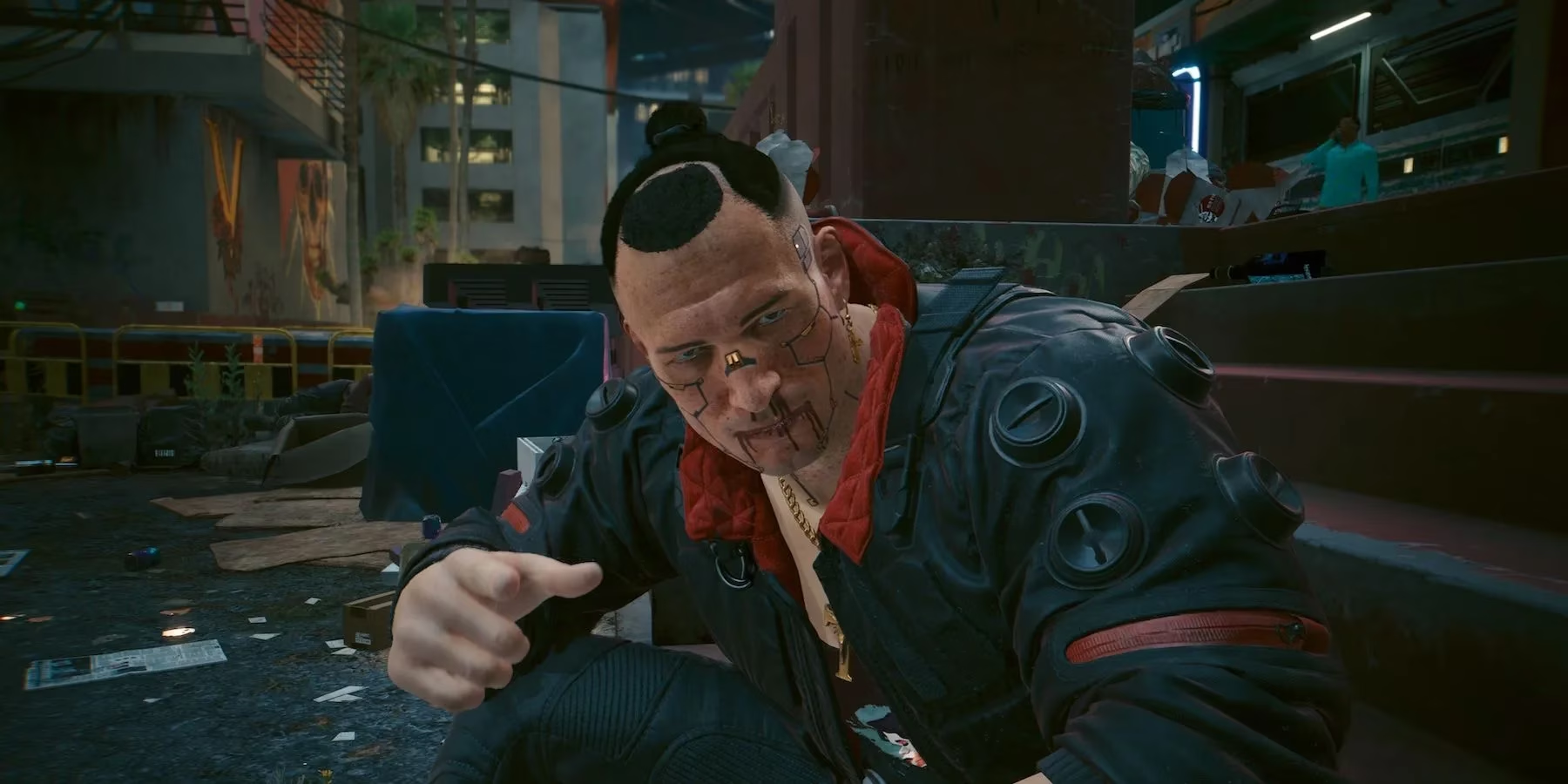
Let’s talk about the current system. It’s functional, familiar, but ultimately feels like a well-worn path. You have your five (now six with Phantom Liberty) core attributes: Body, Reflexes, Technical Ability, Intelligence, and Cool. Each governs a specific playstyle:
-
Body: Your classic bruiser stat. More health, more stamina, more punch.
-
Reflexes: The domain of the agile. Better crits, slicker dodges.
-
Technical Ability: The tinkerer’s friend. Boosts armor and tech interactions.
-
Intelligence: The netrunner’s lifeblood. More RAM, deadlier quickhacks.
-
Cool: The ice-in-your-veins stat. Enhances stealth, crit damage, and resistance.
-
Relic (Phantom Liberty): The wildcard. Unlocks unique arm cyberware abilities and combat camo.
You level up, you get a point, you spend it. Rinse and repeat. It’s a system as common in RPGs as dragons in fantasy, and while it works, it lacks a certain… spark. Investing in Body makes you tougher, but it doesn’t fundamentally change how you move through the world. It’s an incremental upgrade, not a transformative experience. For the sequel, I dream of attributes that don’t just make numbers go up, but that rewrite the rules of engagement entirely.
🧬 Beyond the Stat Sheet: Attributes as Game-Changers
This is where CD Projekt Red can truly innovate. Instead of attributes being mere stat boosters, they should be keys that unlock entirely new gameplay dimensions. The Phantom Liberty DLC gave us a glimpse of this with the Relic attribute—it wasn’t just about power; it was about possibility, letting us see and exploit weaknesses in enemies we couldn’t before.
For Project Orion, I envision new attributes that reshape Night City itself for your character. Imagine an attribute called "Kinetics" or "Transit." Dumping points here wouldn't just increase your sprint speed by 5%. At a high level, it could unlock advanced mobility options like wall-running or charged super-jumps, turning the vertical cityscape into your personal parkour playground. Navigating a megabuilding wouldn't just be about finding the elevator or stairs; it would be about charting a unique, gravity-defying path that only a character built for motion could take.
Another idea? An attribute focused on "Social Resonance" or "Empathy." In a world drowning in chrome, what if you could specialize in the organic? This could deepen the social and narrative gameplay. High investment might allow you to intuitively read a crowd's mood like a weather pattern, opening up unique dialogue options, persuasion paths, or even the ability to temporarily pacify hostile groups through sheer charismatic presence. It would make the social fabric of Night City feel reactive and alive to your build in a way that the current "Cool" stat only hints at.
⚙️ The Blueprint for Evolution
The beauty is, the studio has already laid the groundwork. The introduction of the Relic attribute proved they can successfully graft new, meaningful systems onto the existing framework. Project Orion shouldn't just add more of the same; it should use this template to create attributes that are deeply interconnected.
Think of it this way: in 2077, your attributes are like separate tools in a box. In the sequel, they should be components of a single, complex machine. What if a high Intelligence stat allowed you to overclock your Kinetics cyberware for a short, devastating burst of speed at the cost of health? Or if a high Technical Ability let you modify your Social Resonance implants to broadcast false emotional signals, confusing enemy scanners?
The level of customization in 2077 is vast, allowing for everything from a silent, monowire-wielding ghost to a shotgun-tanking berserker. But the next step is to make these builds feel not just statistically different, but experientially unique. A character built for Kinetics should perceive and interact with the city's architecture in a way that feels as alien to a Social Resonance specialist as netrunning does to a pure Body build.
🔮 A Vision for 2026 and Beyond
As of 2026, Project Orion is our beacon on the horizon. After the rocky launch and phenomenal redemption of Cyberpunk 2077, the pressure is on, but so is the potential. The studio has shown it can learn, adapt, and deliver greatness. For the sequel, taking it slow and being meticulous is key, but so is ambition—especially in the RPG's heart: character creation.
The current attribute system is a reliable engine, but it's time to install a new kind of power core. We need a system where your choices don't just define your strength, but your very relationship with the cybernetic world. Where investing in an attribute feels less like upgrading a car and more like evolving a species. The streets of the next Night City shouldn't just be a backdrop for our actions; they should be a chameleon, changing color and texture based on the attributes we choose to embody. That’s the future of character building I’m fighting for.