I remember the neon-drenched rain of Night City, the hum of chrome and the flicker of holographic ads. As a player who walked its streets, I felt the weight of its world – the crushing inequality, the desperate scramble for survival in the shadows of monolithic corporations. Yet, looking back from the vantage point of 2026, I realize that what I experienced was merely an echo, a reflection that, for all its grit, just touched the surface of the dystopian possibilities it promised.
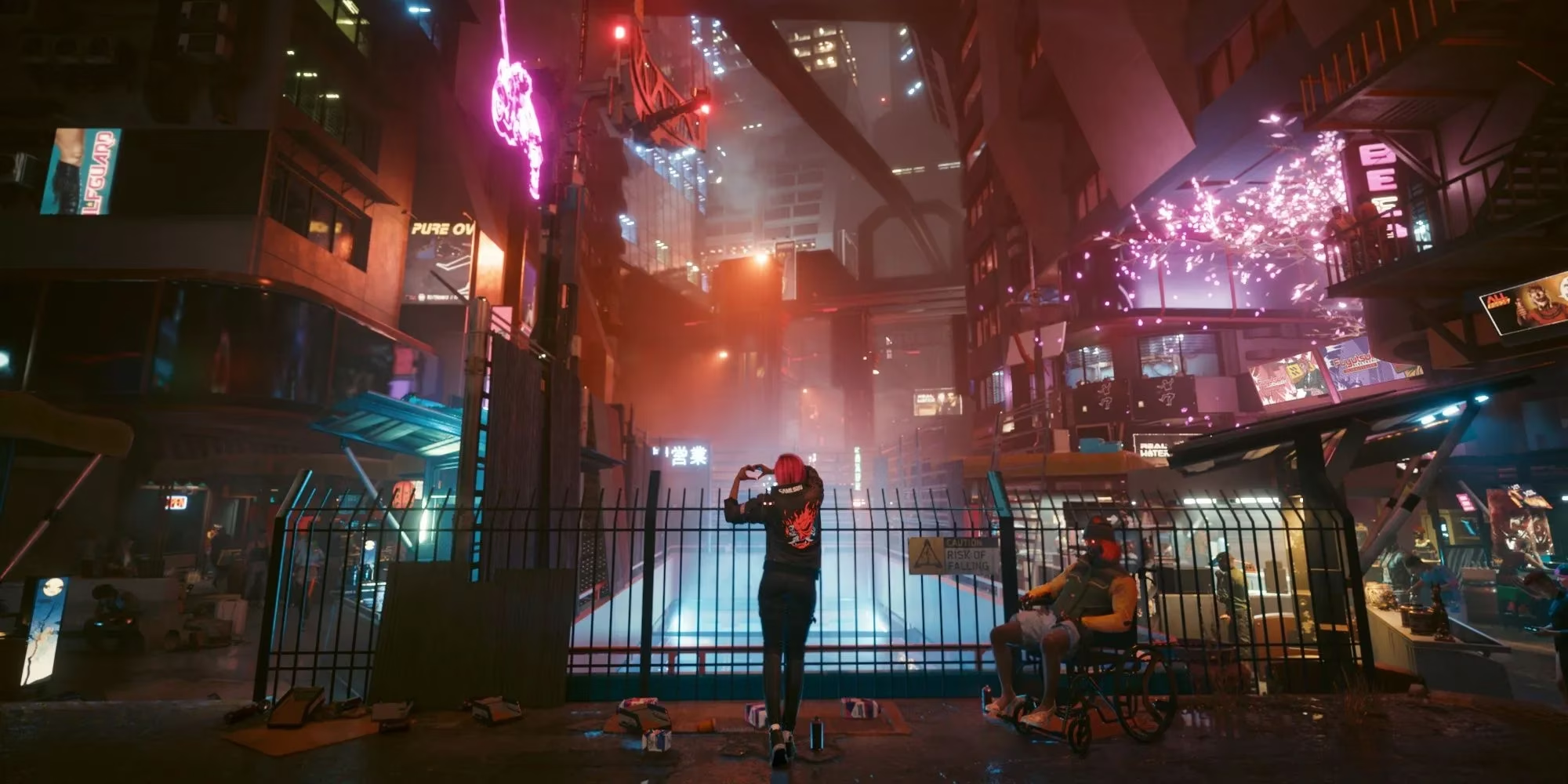
The developers at CD Projekt Red have been remarkably candid about this. In their reflections, they've spoken of a world they thought was dystopian, but one where they now see they could have pushed further. The homeless crisis, the raw edge of societal collapse – they were themes present, yes, but not explored with the depth their haunting potential deserved. It was a beginning, a sketch of a future we feared, but not yet the full, unsettling portrait.
Now, with the sequel, codenamed Project Orion, the ambition is to dive into the abyss. The goal is no longer just to depict a broken world, but to dissect it, to make the player feel the systemic fractures in their bones. The aim is poignant exploration, a relentless questioning of "What is the state of the world today, and what grim silhouette will it cast in a few years?" This isn't about adding more neon or bigger guns; it's about sharpening the narrative blade to cut deeper into the fabric of our own societal anxieties.
To achieve this vision, CDPR has taken a fascinating and deliberate step: establishing a new studio in Boston. This move feels profoundly symbolic. If Night City was a fantastical refraction of California's urban sprawl, then Project Orion seeks a different kind of truth, one rooted in the lived reality of American socio-economics. The developers aren't just imagining a dystopia from afar; they are embedding themselves within the very culture they aim to critique and extrapolate from. This proximity promises a rawness, an authenticity that could only come from being surrounded by the contemporary tensions and triumphs they wish to project into the future.
✨ What might this deeper dive look like? Let my imagination, shaped by their intent, wander:
-
Beyond Visual Poverty: Not just characters sleeping in alleys, but interactive, systemic narratives around housing, resource allocation, and the digital divide that creates a new, invisible class.
-
Corporate Flesh: Moving beyond evil corps as faceless entities to explore the human cost within them—the morally conflicted employees, the internal cultures of dissent and compliance.
-
Technology's Soul: Questioning not just what tech does, but what it undoes in the human psyche. The erosion of memory, the commodification of emotion, the blurring line between agency and algorithm.
This commitment to depth is the most exciting promise of Project Orion. The original game's journey—from a troubled launch to a celebrated masterpiece through updates and the phenomenal Phantom Liberty expansion—proved CDPR's dedication to their worlds. They learned, they listened, they evolved. That same spirit of refinement is now being applied to the core philosophy of their storytelling.
I yearn for a world that doesn't just let me be a cyberpunk, but forces me to confront what that truly means. A world where every chrome implant has a social cost, every corporate loyalty test has a human consequence, and every alleyway tells a story more complex than mere survival. Project Orion seems poised to build that world. It plans to lean in, not just into the style of cyberpunk, but into the haunting, profound, and unsettling substance of it. The wait will be long, but if the destination is a world that truly makes us see our own reflections—flawed, fragile, and hurtling toward tomorrow—in its fractured glass, then every moment of anticipation will be worth it. The surface was only the beginning; the depths await.