Completing the main storyline of Cyberpunk 2077 feels less like reaching a destination and more like stepping off a roaring train that had been hurtling through the neon-drenched canyons of Night City. For many players in 2026, the initial journey is often driven by a false sense of urgency, a narrative trick masterfully deployed by CD Projekt Red. The game relentlessly emphasizes V's deteriorating condition due to the experimental Relic technology, creating a psychological ticking clock that makes players feel they must race toward a cure. Like a rabbit mesmerized by headlights on a dark highway, players can sprint past entire districts of this meticulously crafted world, missing the subtle stories, nuanced characters, and environmental details that breathe life into the California of the future. The developers themselves have clarified that the alarming percentage counters related to the Relic's degradation are narrative devices, not literal timers. This realization opens the door to replayability and deeper exploration, transforming the post-game experience from an epilogue into a second, more deliberate volume of V's life.
The Weight of Endings: Finality in a Digital Age 🎭
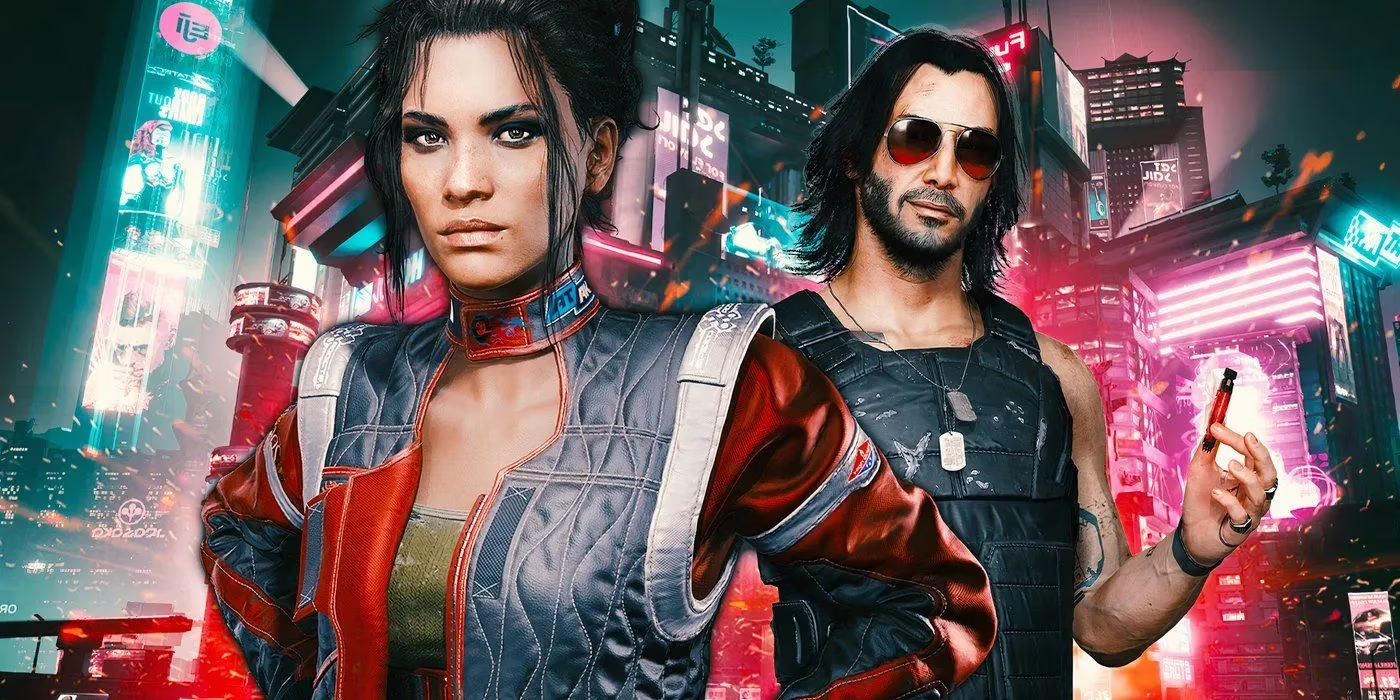
Most conclusions to V's saga carry a profound sense of closure, a final curtain that can feel as absolute as a datafile corrupted beyond recovery. In several key endings, V and Johnny Silverhand must make the ultimate choice in cyberspace: determining who gets to return to the mortal coil and who will be cast beyond the Blackwall into digital oblivion. Other paths see V return to Night City, but only with the grim knowledge of a six-month expiration date. The options available—escaping with Panam and the Aldecaldos, or launching a legendary 'suicide mission' against the Crystal Palace space station—are bittersweet final chapters.
Even the endings where V technically survives aren't happy homecomings; they're complex trades. Surrendering to Arasaka means a future as a corporate lab experiment. Choosing the Federal Intelligence Agency (FIA) in the Phantom Liberty storyline results in the Relic's removal, but at a catastrophic personal cost. V awakens from a years-long coma to a world where friends have moved on or relationships have crumbled into disrepair. Most devastatingly, the procedure leaves V's nervous system so damaged that they can never again use Cyberware. In a city where chrome is as essential as oxygen, this condition is as crippling as a bird having its wings clipped—it severs V from the very essence of Night City's power dynamics, making a return to their former mercenary life impossible.
The Gift of a Second Chance: The Post-Credit Reboot 🔄
Given this thematic finality, one might expect Cyberpunk 2077 to be unplayable after the end credits. Yet, in a clever design choice, the game offers a graceful rewind. Players are returned to a pivotal moment: the point of no return just before the Nocturne Op55N1 mission, where V is meant to meet Hanako at Embers. This reset isn't a simple reload; it's the game's way of saying, "Now, explore without the pressure." It transforms the final mission from a cliff's edge into a panoramic viewpoint, allowing V to look back over the vast metropolis with new eyes.
However, this temporal checkpoint comes with narrative caveats. The game returns you to a specific save state, meaning certain ending paths may already be sealed based on your prior choices. The fate of key allies like Takemura or the strength of your relationships with Johnny, Panam, or Judy act as narrative gates. For completionists aiming to experience every possible finale in 2026, this might necessitate a fresh playthrough with different decisions—a testament to the game's enduring and branching narrative design.
Night City Awaits: The Post-Game Playground 🌃
The true beauty of this post-credit reset is the liberation it provides. With the illusory urgency of the Relic silenced, Night City unfolds not as a race track but as a sprawling, breathing ecosystem to be studied. Players can finally indulge in the classic open-world rituals:
-
Complete every Gig and NCPD Scanner Hustle ⚙️
-
Hunt down elusive Cyberpsychos 🤖- Discover unmarked quests and environmental stories (like the sentient vending machine Brendan!) 🗺️
-
Max out all skill trees and acquire iconic weapons ⚔️
-
Simply bask in the atmospheric details—the rain-slicked streets of Japantown, the deafening silence of the Badlands at night, or the chaotic symphony of the Afterlife bar.

Night City is a tapestry woven with countless threads, many of which are easy to miss on a first, story-driven pass. Its density is like a neural network—seemingly chaotic on the surface but pulsing with interconnected, hidden data streams beneath. This post-game phase allows players to become true denizens of the city, uncovering stories as subtle as a glitch in a braindance or as grand as a corporate conspiracy. It’s an opportunity to appreciate CD Projekt Red's world-building in its full, untethered glory, realizing that the main quest was merely the most prominent artery in a body teeming with capillaries of side stories.
Ultimately, Cyberpunk 2077's handling of the post-game is one of its most player-friendly—and thematically resonant—features. It acknowledges the weight of its own narrative conclusions while refusing to let them become a cage. It gives V, and by extension the player, a rare commodity in a dystopian future: time. Time to fix what was broken, to see what was missed, and to forge a different, perhaps more personal, legend in the neon glow before that final meeting at Embers. In a world obsessed with the end game, it celebrates the journey itself, allowing Night City to transform from a backdrop for V's crisis into a character in its own right, waiting to be fully known.