As we look ahead to 2026 and beyond, the buzz around Project Orion, the sequel to Cyberpunk 2077, is absolutely electric. Having spent countless hours getting lost in the neon-drenched, rain-slicked alleys of Night City, I'm not just excited—I'm obsessed with where this world could go next. The first game gave us a breathtaking, if sometimes flawed, vision of a high-tech, low-life future. But now, with the launch drama firmly in the past, the stage is perfectly set for the sequel to not just revisit this world, but to radically evolve it. The core concepts are all there, simmering with potential, just waiting for Project Orion to turn up the heat and deliver an experience that truly defines the next generation of cyberpunk storytelling.
Let's talk about the elephant in the room—or rather, the chrome in the chassis. Transhumanism. It's the beating, often synthetic, heart of the entire cyberpunk genre. In 2077, it was everywhere you looked: from the ripperdocs on every corner to the glint of metal in a fixer's smile. Yet, for something so pervasive, it often felt like background noise. Sure, we dealt with cyberpsychos and met characters like the iconic, fully chromed-out rockstar Lizzy Wizzy, but the deeper, more personal existential horror of it all? That was often secondary to the main plot of heists and corporate warfare.
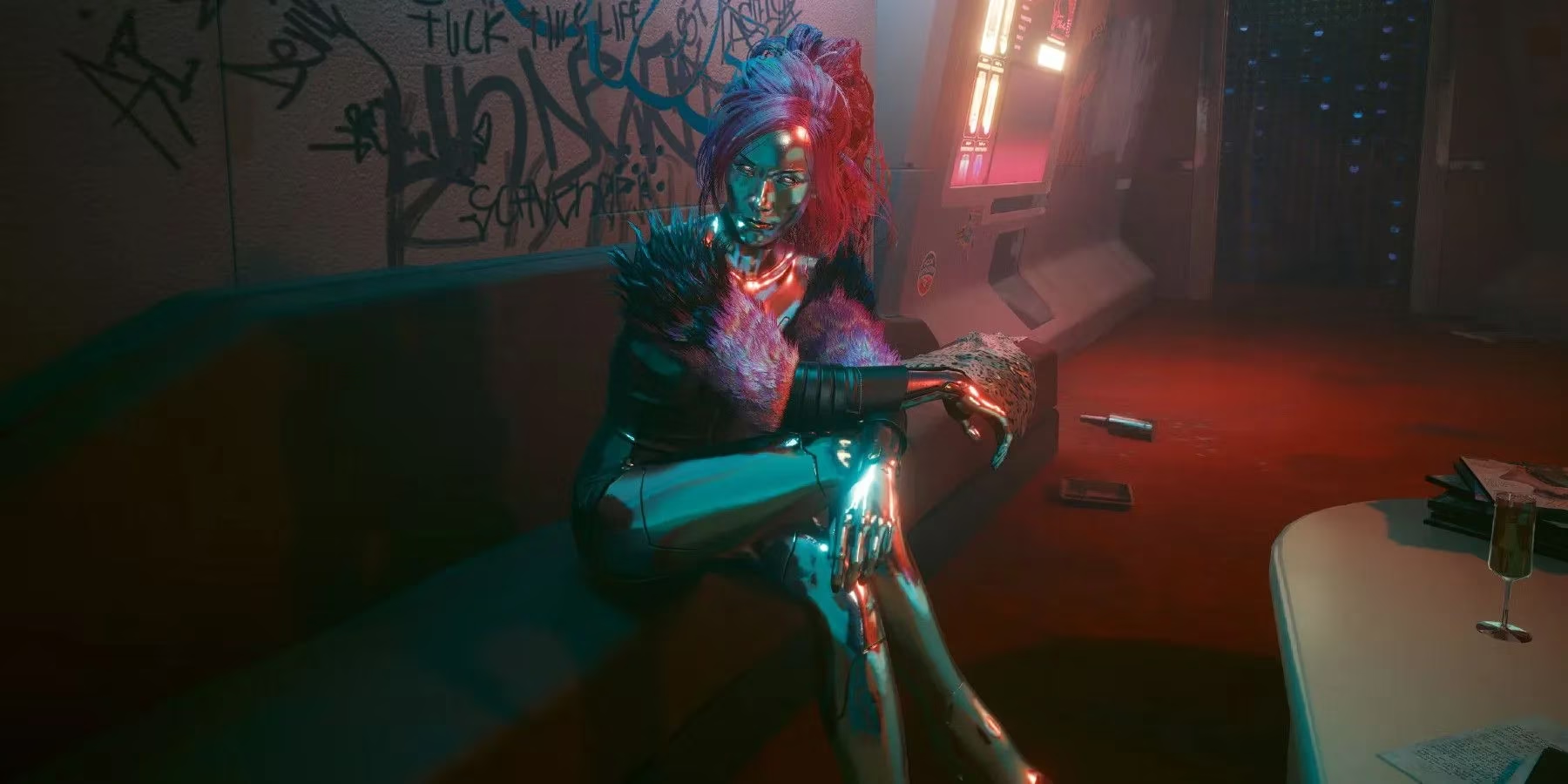
Just look at her. Is that even a person anymore, or a work of art? A weapon? This is the question Project Orion needs to force us to ask ourselves.
This is where Project Orion has its golden opportunity. Forget 2077. I'm talking a significant time jump—decades into the future. Imagine a Night City where the technological saturation we saw has accelerated beyond recognition. What happens when 'getting chipped' isn't just about a new optic scanner or a mantis blade for the edgerunners, but about fundamentally rejecting your humanity to survive—or to compete?
🔮 My wishlist for Project Orion's transhumanist nightmare:
-
The New Normal is Inhuman: Everyone has extensive mods. The question isn't 'if' you're modified, but 'how much' of your original body is left. Street kids trade organs for the latest chrome, and the concept of a 'pure' human is a myth for the ultra-rich in their orbital stations.
-
Identity Crisis as Gameplay: What if your cyberware choices didn't just affect your stats, but how NPCs perceive and interact with you? Go too far with combat mods, and peaceful resolution options vanish. Replace too much, and you start to forget personal memories stored in biological tissue.
-
Beyond Cyberpsychosis: We saw the violent, extreme end of the spectrum. Let's see the slow burn. The depression from a body that doesn't feel like yours. The addiction to upgrading. The philosophical cults that worship the Singularity or burn chrome in the streets.
And can we please, please, get a deeper dive into characters like Adam Smasher? He wasn't just a boss fight; he was a warning. A vision of a future where empathy is literally engineered out of a person for peak efficiency in violence. Project Orion's world should be filled with these walking moral dilemmas—characters who make you wonder if the line between man and machine was crossed long ago, and if there's any way back.
Night City itself should be a character transformed. The sequel shouldn't just give us a prettier version of the same map. I want to see the consequences of unchecked progress.
🏙️ A Glimpse into the Future City:
| 2077 Night City | Project Orion's Night City |
|---|---|
| Mega-buildings and neon | Arcologies that are fully AI-managed living ecosystems |
| Gangs based on territory | Gangs based on cyberware ideology (e.g., Purists vs. Transhumans) |
| Braindances as entertainment | Shared consciousness networks as the new 'net'—with deadly risks |
| Corpos as powerful entities | Corpos as literal entities, with CEOs who are uploaded consciousnesses living in server farms |
The potential here is limitless. By jumping forward in time, Project Orion can hold a darker, sharper mirror up to our own rapidly advancing world of AI, neural interfaces, and genetic editing. Cyberpunk 2077 asked, "What does it mean to be human in an inhuman world?" Its sequel needs to force us to ask, "What are you willing to sacrifice to become more than human? And what do you lose when you win that change?"
The groundwork is laid. The chrome is polished. Now, it's time for Project Orion to take us on a ride into a future that's more dazzling, more dangerous, and more philosophically terrifying than anything we've seen before. My body is ready (but honestly, I'm kinda hoping to trade it in for something shinier). See you in the next decade, chooms. The future isn't just coming—it's waiting to be installed.